Costs
Why Tow Prices Vary in Spokane, From the Viaduct to the Side Streets
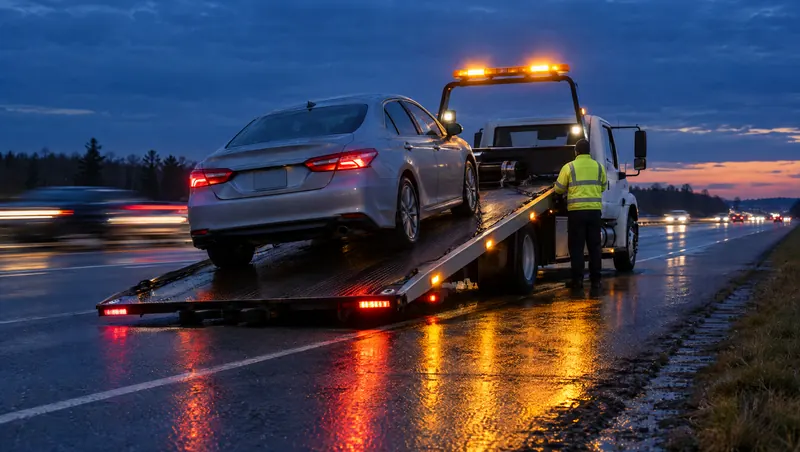
In Spokane, time on the job moves a tow price more than anything else. Washington law says a fee for tow truck service is figured by the hour. So a car stalled on the I-90 viaduct downtown, with traffic close by, is a slower and harder job than a flat on a quiet side street. Snow, the trip to the shop and your vehicle come next. You get one price by text before a truck is sent.
How does Washington bill a tow?
Most people think a tow is priced by the mile. In Washington, the law starts with the clock. Under RCW 46.55.063, a fee for tow truck service is figured on an hourly basis. After the first hour, it is charged to the nearest quarter hour.
The same law says a few more things that matter to you:
- Each tow operator files a fee schedule with the state Department of Licensing.
- No fee can be higher than what the operator filed.
- A change to that schedule has to be filed at least ten days before it takes effect.
- If you pick up a car from a tow yard, the bill must be itemized, so you can see each fee.
So the real question is not just "how far?" It's "how long will this take?" Every step adds to that. The drive out to you. The hookup. Any winching. The haul to where the car is going.
Why is the I-90 viaduct a bigger job than a side street?
Downtown, I-90 runs up on a viaduct along 4th Avenue. It's raised above the streets, so there's nowhere to roll off. A driver working there has to set up carefully, with fast traffic going by.
Washington's move-over law helps. RCW 46.61.212 treats the lanes next to a working tow truck, 200 feet before and after it, as an emergency zone. But your driver still has to watch every car. That takes time, and time is what the bill is built on.
Now take the same dead car on a flat side street near Sunset Hill. Your driver pulls up behind it, hooks it and goes. Same car, same problem, much shorter job.
A few other spots tend to make a job slower:
- The US 195 interchange west of downtown, which sits under railroad overpasses.
- The climb up Sunset Hill, where eastbound I-90 drops down into the city.
- A steep, icy street on the South Hill after a storm.
- A tight parking garage downtown where a truck can't reach the car.
If your car still rolls, get it off I-90 at the next exit, onto a side street or into a lot. That's safer, and it often makes the job simpler. If it won't move and you're in a lane, call 911 first. WSDOT says to dial 911 for help on the roadway, even for a flat or an empty tank.
What happens if a trooper calls the tow?
This part surprises people. When the Washington State Patrol needs a car moved, it uses tow companies on a list for that area. Each patrol district sets its own tow zones, and the trooper's dispatch calls a company from that zone.
Those tows follow state patrol rules in WAC 204-91A-140:
- The rate is a flat hourly rate. It's the same at night, on weekends and on holidays.
- The patrol chief sets the highest hourly rate allowed for patrol calls, before October 15 each year.
- That rate covers hookup, winching, dollies, a tire change and waiting time.
- The clock starts when the truck leaves on the call. It stops when the truck gets back to its zone, its yard or its office.
You still have some say. Under WAC 204-91A-150, if your car isn't blocking traffic and you're there, you may set up your own tow. You can also ask the trooper for a certain tow company. The trooper will honor it if that company is close enough and the request makes sense for the scene. If you're blocking a lane, expect the trooper to decide.
Does a Spokane winter change the price?
It changes what your car needs, and that changes the job. NOAA's 1991 to 2020 normals for the Spokane airport show about 117 nights a year at or below freezing. They show about 45 inches of snow a year.
- It won't start after a cold night in Hillyard. That may only need a jump start, a smaller job than a tow.
- It slid into a plow berm on the South Hill. If it isn't damaged, a winch-out can pull it back to the pavement.
- It hit the curb hard, or it smokes and won't move. That's a car tow to a shop or home.
Snow also slows the hookup itself. A driver may need to clear around the wheels, or work on ice. Tell us if the car is buried, on a hill or nose down in a ditch. That way the price you see fits the job.
Does it matter where the car goes?
An hourly bill counts the whole trip. Before you call, think about where the car should end up. Use the last I-90 exit you passed to judge the distance:
| Where you are | I-90 exit |
|---|---|
| Four Lakes, toward Cheney | 270 |
| Division Street, US 2 and US 395 north | 281 |
| Argonne, Spokane Valley | 287 |
| Liberty Lake | 296 |
A car that dies at Liberty Lake can go to a shop in Spokane Valley. Or it can go all the way to your mechanic up North Division. Those are two different hauls, so they get two different prices. A shop close to where you stopped is often the shorter trip. Your own mechanic may still be worth the extra miles. That's your call.
Does my vehicle change the price?
Yes. Give the year, make and model. Say if it's all-wheel drive, sits low, or has a loaded bed or a hitch. A vetted local partner handles cars, SUVs, minivans and light pickups. An RV or a big truck needs a heavy tow company, and we'll tell you that right away.
How does Sentinel set my price?
Sentinel Towing is a towing and roadside network. We own no trucks, and we have no Spokane office. A vetted local partner tow company does the job. We look at where you are, what broke and where the car is going. Then we text you a price before anyone is sent. That price is the most you pay for the job.
If the job turns out to be different when your driver sees the car, we text a new price first, and you decide. We check on you by text until help arrives, and you can track your truck on a map. We won't promise the cheapest tow in Spokane. We promise one clear price up front. That's part of the Stay-With-You Promise.
What should I have ready when I call?
- The road, your direction and the last exit or cross street.
- If you're on the viaduct, say so, plus whether you're blocking a lane.
- Which side of Division you're on, if you're in the city.
- What the car did, plus the year, make and model.
- Where you want the car to go: home, a shop or your mechanic.
Stuck right now? Call 1-888-TOW-1213, or request help online.
For jump starts, winch-outs and tows from Airway Heights to Liberty Lake, see our Spokane towing page. Before you drive, check the WSDOT travel map for crashes and closures on I-90.
Spokane Tow Cost Questions
Is there cheap towing in Spokane?
We can't promise cheap. The best way to keep a tow short is to get the car off I-90 if it still rolls, and pick a shop close by. If the car just won't start, ask about a jump first.
Why does Washington charge for a tow by the hour?
State law, RCW 46.55.063, says tow truck service fees are figured on an hourly basis. After the first hour, they're charged to the nearest quarter hour. That's why a slow, tricky hookup costs more than a quick one.
Can I pick my own tow if a trooper stops to help?
Often, yes. If your car isn't blocking traffic and you're there, state rules let you set up your own tow. You can also ask for a certain company. The trooper decides if that request is reasonable for the scene.
Can the price go up once the driver gets there?
Only if the job is different from what you told us. If that happens, we text you a new price before any work starts. You decide whether to go ahead.
Rules change, so check the official source before you rely on it. Sources: RCW 46.55.063, WAC 204-91A-140, WAC 204-91A-150, WAC 204-91A-160, RCW 46.61.212, WSDOT Incident Response, NOAA climate normals, Spokane, WSDOT travel map.