How-to
Lexington Breakdown Help: Why There's No Freeway Downtown, and What That Means for You
In Lexington, where you stall changes what you do next. Downtown and around the University of Kentucky, there's no freeway at all. You're on city streets, so a side street, a lot or a curb is often a few feet away. On I-75 and I-64, traffic is fast, and Kentucky law sets stricter rules after a crash. Call 911 if anyone is hurt or you're stuck in a live lane. For anything else, give the street and the nearest cross street, or the exit number.
Why is there no freeway in downtown Lexington?
No Interstate cuts through the middle of Lexington. I-75 and I-64 skirt the north and east edges. Downtown has no controlled-access road of any kind.
Instead, the center is served by streets that run out like spokes. Nicholasville Road, Harrodsburg Road, Leestown Road and Winchester Road all start near downtown. New Circle Road loops around them. Most of New Circle is limited-access, but part of it has lights and driveways.
That has a cost. With few freeways and the University of Kentucky right beside downtown, traffic backs up more than you'd expect for a city this size. So a car that dies near campus at rush hour is a real problem. It just isn't a freeway problem.
What should I do if my car dies on a downtown or campus street?
On a city street, you usually have more options than on the Interstate. Use them.
- Turn on your hazard lights right away.
- If the car still rolls, coast to the curb, a side street or a parking lot.
- If it stops in a lane and won't move, stay belted in with the hazards on.
- Look for the nearest cross street sign. Write it down or read it into your phone.
- Call for help with the street name, the cross street and which way you were headed.
Lexington Police list illegal parking and traffic violations as non-emergency calls. A dead car blocking a lane downtown is not a 911 call by itself. If you can't get it out of the way and you're worried about traffic, call the non-emergency line at (859) 258-3600.
Game day and event nights
Your battery dies in a packed lot after a game, and nobody can get around you. Don't push the car alone in a crowd. Note the lot name or the nearest entrance. Then call. A dead battery is often fixed with a jump start right where you sit, with no tow at all.
How do I tell someone where I am on I-75 or I-64?
Out on the Interstates, the exit number is your best clue. Here's the trick most visitors miss. I-64 joins I-75 at exit 111 on the east side. The two roads share the same pavement for about 7 miles. I-64 splits off again at exit 118, heading west to Frankfort and Louisville. On that shared stretch, the signs use I-75's exit numbers for both roads.
| Exit | Road |
|---|---|
| 104 | Athens-Boonesborough Road (KY 418) |
| 108 | Man o' War Boulevard |
| 110 | Winchester Road (US 60) |
| 111 | I-64 east joins, toward Winchester |
| 113 | North Broadway (US 27 and US 68) |
| 115 | Newtown Pike (KY 922), signed for Blue Grass Airport |
| 118 | I-64 west splits, toward Frankfort |
| 120 | Iron Works Pike (KY 1973) |
So if you passed exit 113, don't worry about whether you're on I-64 or I-75. Say "I-75 northbound, just past exit 113." That's enough for a driver to find you.
Is there free state help on Lexington's Interstates?
Yes, for small problems. The Kentucky Transportation Cabinet runs the SAFE Patrol. It's a free service for drivers in trouble on Kentucky's interstates and parkways. KYTC's coverage list includes I-75, I-64 and the shared stretch through Lexington.
- What they do: jump starts, fuel, tire changes, coolant, water, oil and minor repairs. They can also push a car off the roadway.
- When: KYTC lists 7 days a week, 6 a.m. to 10 p.m.
- How to reach them: 1-877-FOR-KYTC (1-877-367-5982).
SAFE Patrol works the Interstates and parkways, so it won't come to Main Street or a campus lot. It also isn't a tow. Late at night, on a city street, or when the car won't drive at all, you need someone else.
What does Kentucky law say if I crash on I-75?
This is where the Interstate and downtown really differ. Kentucky's crash law, KRS 189.580, has a special rule for interstates, parkways and their ramps.
- If nobody is killed or visibly hurt, and no hazardous materials are involved, you must move your car off the roadway.
- Move it as close to the crash scene as you can, without blocking traffic.
- Do it as soon as the car can move without more injury or damage.
- If you can't drive it, you may let another licensed driver move it.
If a car is blocking an interstate or parkway, an officer can have it removed without your OK. So don't leave a fender bender sitting in a lane on I-75.
What about a crash on a city street?
The move-it rule above names interstates, parkways and ramps. Another part of the same law covers every highway in Kentucky. If a crash hurts someone or leaves a car unable to drive, you must call 911 or the police right away, if you're able to. Whoever was involved also has to share registration, names and addresses if asked.
In Lexington, a crash with injuries is a 911 call. A crash with no injuries goes to the non-emergency line, (859) 258-3600.
Why did my 911 call go to the State Police?
This one surprises people. Lexington's police site says some parts of Fayette County send cell phone 911 calls to the Kentucky State Police. If that happens, tell them you have an emergency in Fayette County. Ask for the Lexington Police Department. They'll connect you.
Give the call taker an exact spot. The city asks for a house address or a street intersection. On I-75, that means the direction and the exit.
Do other drivers have to move over for me?
Yes. Kentucky's move-over law covers a disabled car showing flashers, flares or reflective signals. On a road with four or more lanes and two going your way, drivers must move to a lane away from you if it's safe. If they can't, they must slow down. Keep your hazards on the whole time you wait. Before a trip, check GoKY for crashes and work zones.
Do I need a tow, or something smaller?
Plenty of Lexington breakdowns end without a hookup. Match the help to the problem.
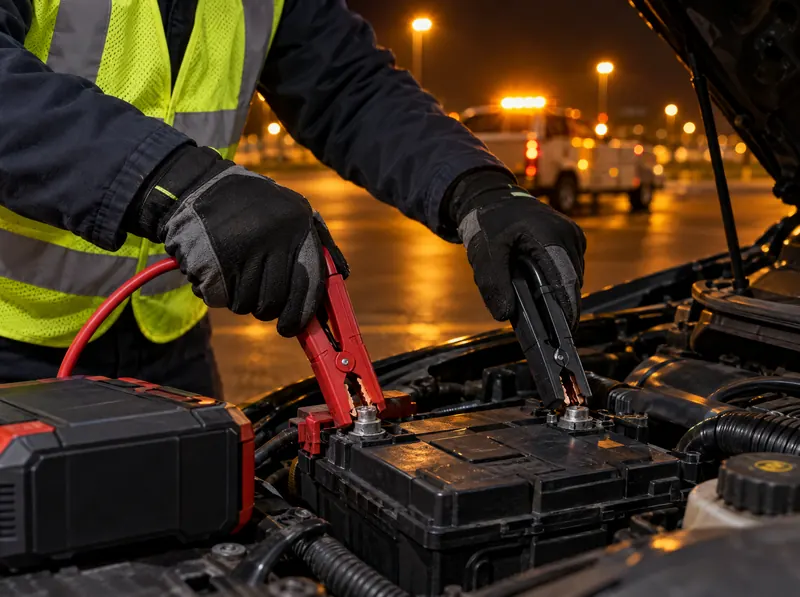
- It clicks and won't start. Try a jump start before anything else.
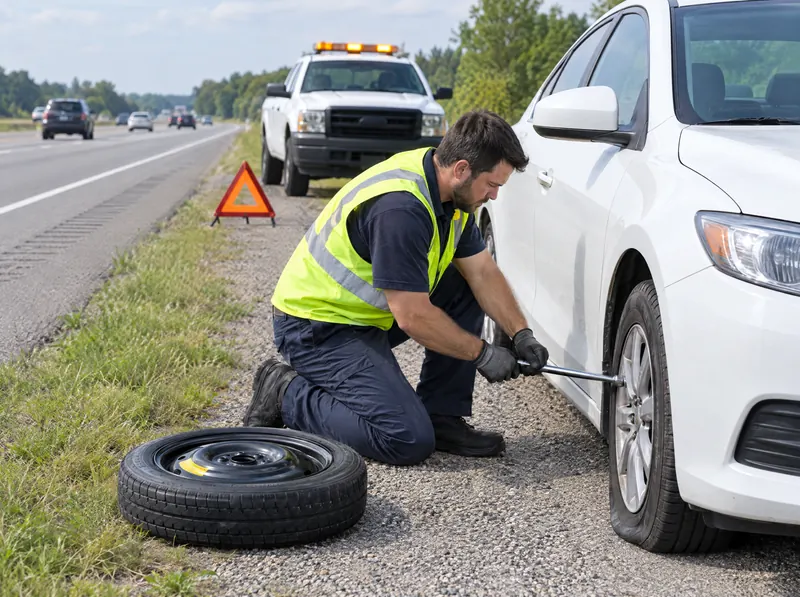
- Flat tire on New Circle. Got a good spare? Your driver can put it on. See flat tire change.
- Keys locked in at a UK garage. A car lockout visit gets you back in.
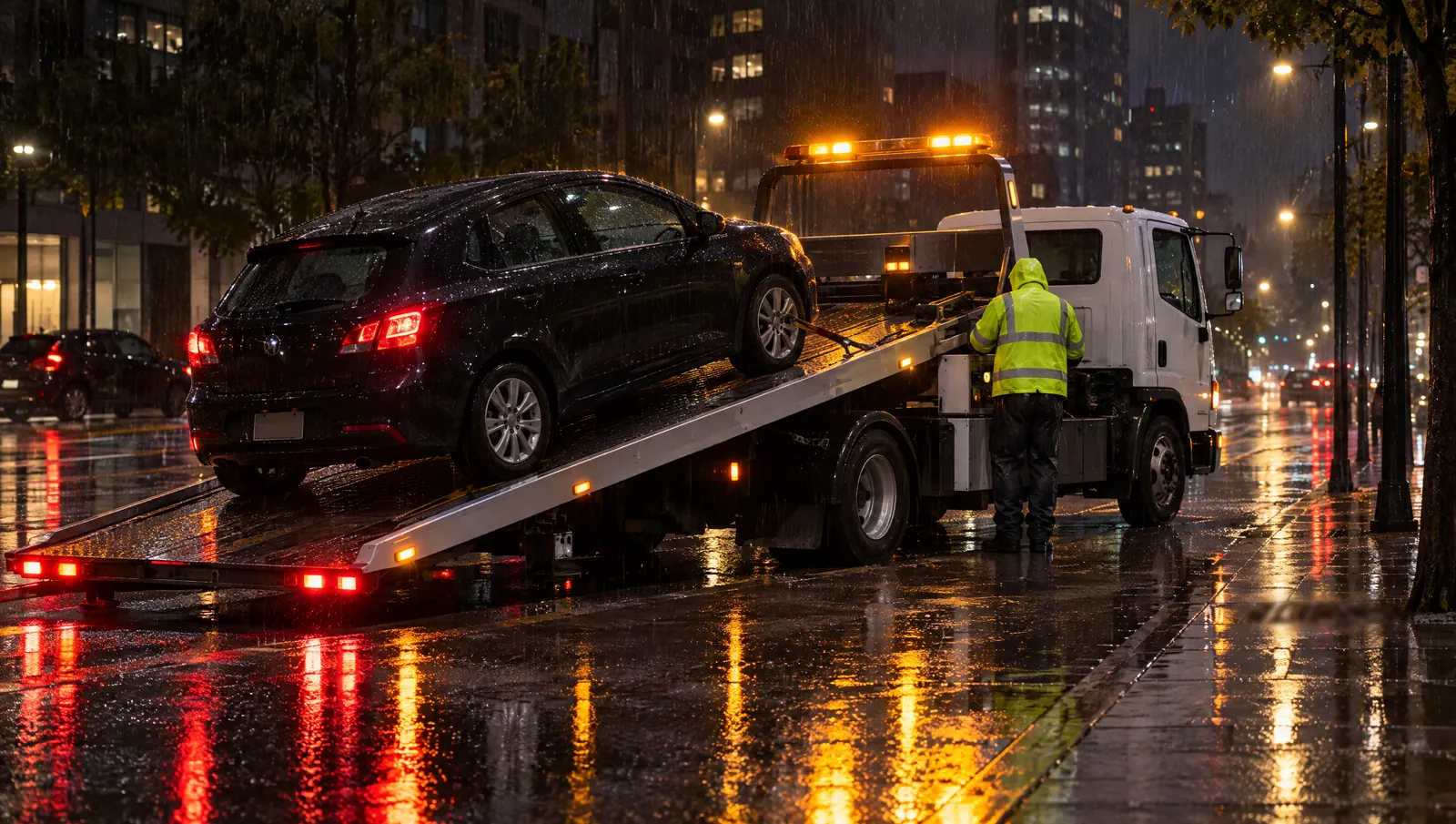
- It won't drive, or it's leaking or smoking. That's a tow. Pick a shop before you call, so the driver knows where to go.
How does Sentinel fit in?
Sentinel Towing is a towing and roadside network. A vetted local partner tow company does the job. We text you a locked price before anyone is sent. You get your driver's name, photo and truck by text, and you can track your truck on a map. We check in by text until help arrives. That's the Stay-With-You Promise. Sentinel is not an emergency service, so 911 comes first when anyone is hurt.
The Lexington towing page covers New Circle, the farm roads and the towns nearby. For the rest of the state, see Kentucky towing.
Stuck right now? Call 1-888-TOW-1213, or request help online.
Lexington Breakdown Questions
I'm between exits 111 and 118. Am I on I-64 or I-75?
Both. The two roads share that stretch on the north and east side of Lexington. The signs use I-75's exit numbers. Just give the direction and the last exit you passed.
Will the SAFE Patrol help me downtown?
No. KYTC's SAFE Patrol covers interstates and parkways, not city streets. On I-75 or I-64, you can call 1-877-FOR-KYTC. Downtown or near campus, call a roadside service.
Do I have to move my car after a small crash on I-75?
If nobody is hurt and the car can move safely, Kentucky law says yes. Move it off the roadway, close to the scene. If anyone is hurt, leave it and call 911.
Who do I call if my dead car is blocking a downtown street?
If nobody is hurt, Lexington Police take that on the non-emergency line, (859) 258-3600. Keep your hazards on. Then call for a jump or a tow.
Rules change, so check the official source before you rely on it. Sources: KRS 189.580, KRS 189.930, Lexington Police: when and how to call, KYTC safety facts, KYTC SAFE Patrol program, GoKY.