Costs
Why Tow Prices Vary Between New Orleans East and Uptown
In New Orleans, the same tow can price differently in New Orleans East and Uptown for one main reason: the miles between your car and the shop you pick. The East runs from the High Rise over the Industrial Canal out past Michoud, along a long stretch of I-10. Uptown sits close to Canal Street. Where the car is stuck, what went wrong and what you drive matter too.
Why does the part of town change a tow price?
A tow price is built from the job, not the zip code. The biggest piece is distance. That means the trip from where your car sits to where it needs to go.
New Orleans is a long city. Canal Street divides uptown from downtown. Uptown neighborhoods like the Garden District, the Irish Channel, the University District and Carrollton spread out along St. Charles Avenue. New Orleans East is on the other side of the Industrial Canal, and it keeps going a long way.
So a car that dies near St. Charles Avenue and goes to a shop on Tulane Avenue is a short haul. A car that dies near Michoud Boulevard and goes to that same Tulane Avenue shop is a much longer one. The truck, the driver and the hookup are the same. The miles are not.
How far out does New Orleans East go?
Farther than most people think. I-10 exit numbers match the mile markers, so they tell the story. The Poydras Street exit by the Superdome is exit 234B. Here is what comes after it heading east:
| I-10 exit | Where it goes |
|---|---|
| 240A and 240B | Downman Road, and US 90 (Chef Menteur Highway) |
| 241 and 242 | Morrison Road, Crowder Boulevard |
| 244 and 245 | Read Boulevard, Bullard Avenue |
| 246 | I-510 and LA 47, toward Chalmette |
| 248 | Michoud Boulevard |
| 254 | US 11 and Irish Bayou, just before the Twin Span |
Read Boulevard is about 10 miles of interstate past the Superdome exit. Exit 254 is about 20. All of it is still inside the city. A shop near your home in the East can be close. A shop in Mid-City or across the river is not.
What is on that stretch past Michoud?
Mostly marsh. Bayou Sauvage Urban National Wildlife Refuge sits in eastern New Orleans. The Department of the Interior calls it the nation's second largest urban refuge, at nearly 30,000 acres. It lies mostly inside the levees of the East.
Two old exit numbers out there, 249 and 251, are closed. One connecting road was never built. The other serves a gravel road open only to authorized traffic. So after Michoud, the next exit you can use is 254 at US 11.
That matters if your car quits between Michoud and Irish Bayou. There is no quick way off. Your partner tow company may have to go up to the next exit and turn around to reach you on the right side. Tell the dispatcher your direction and the last exit you passed. It helps your driver find you.
If you stall on that stretch, stay in the car with your belt on and your hazards flashing. If you're in a live lane or anyone is hurt, call 911 first. Sentinel is not an emergency service.
Does crossing the High Rise or a bridge change the job?
It can. Between the Industrial Canal and downtown, I-10 climbs the High Rise. The bridge runs from about mile 239 to mile 240. There's little room to stop up there.
A breakdown on the High Rise is a harder pickup than one on a side street in Gentilly. Your driver has to work next to fast traffic on a bridge. The same goes for the Twin Span to Slidell, which is about five miles over Lake Pontchartrain, and the Paris Road Bridge on I-510 toward Chalmette.
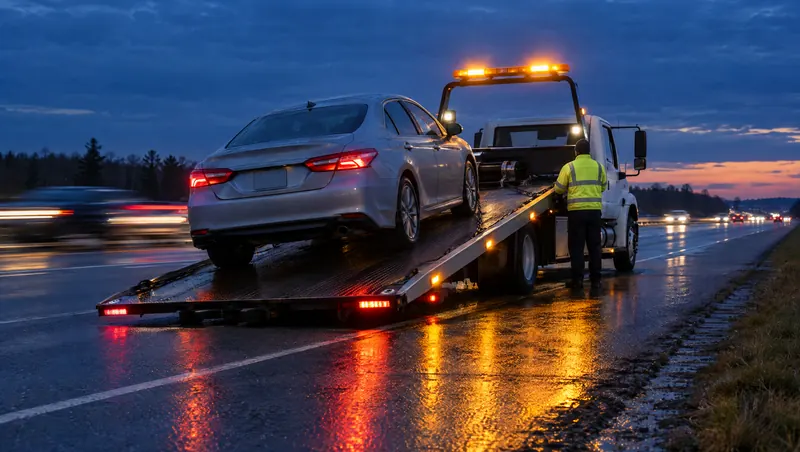
Louisiana law says a driver whose car is disabled in a travel lane must move it as soon as possible and protect traffic until then. If the car can't move, turn on your hazards and stay buckled in. Louisiana's move over law also covers trucks with flashing amber or yellow lights, so other drivers must give your tow truck room.
Is a tow Uptown always the cheaper one?
No. Uptown is closer to the center of town, but the job can still grow. A few things that change an Uptown tow:
- Where the shop is. A car going from Carrollton to a shop on the Westbank crosses the Crescent City Connection. That's a longer trip than a few blocks.
- How the car is parked. A car wedged tight at the curb on a narrow side street can be slower to hook up than one in an open lot.
- The streetcar. The St. Charles streetcar runs on St. Charles Avenue between Canal Street and the Riverbend at Carrollton. Your car can't sit on the tracks while it waits. If it quits near the line, get it clear if you safely can, and say so when you call.
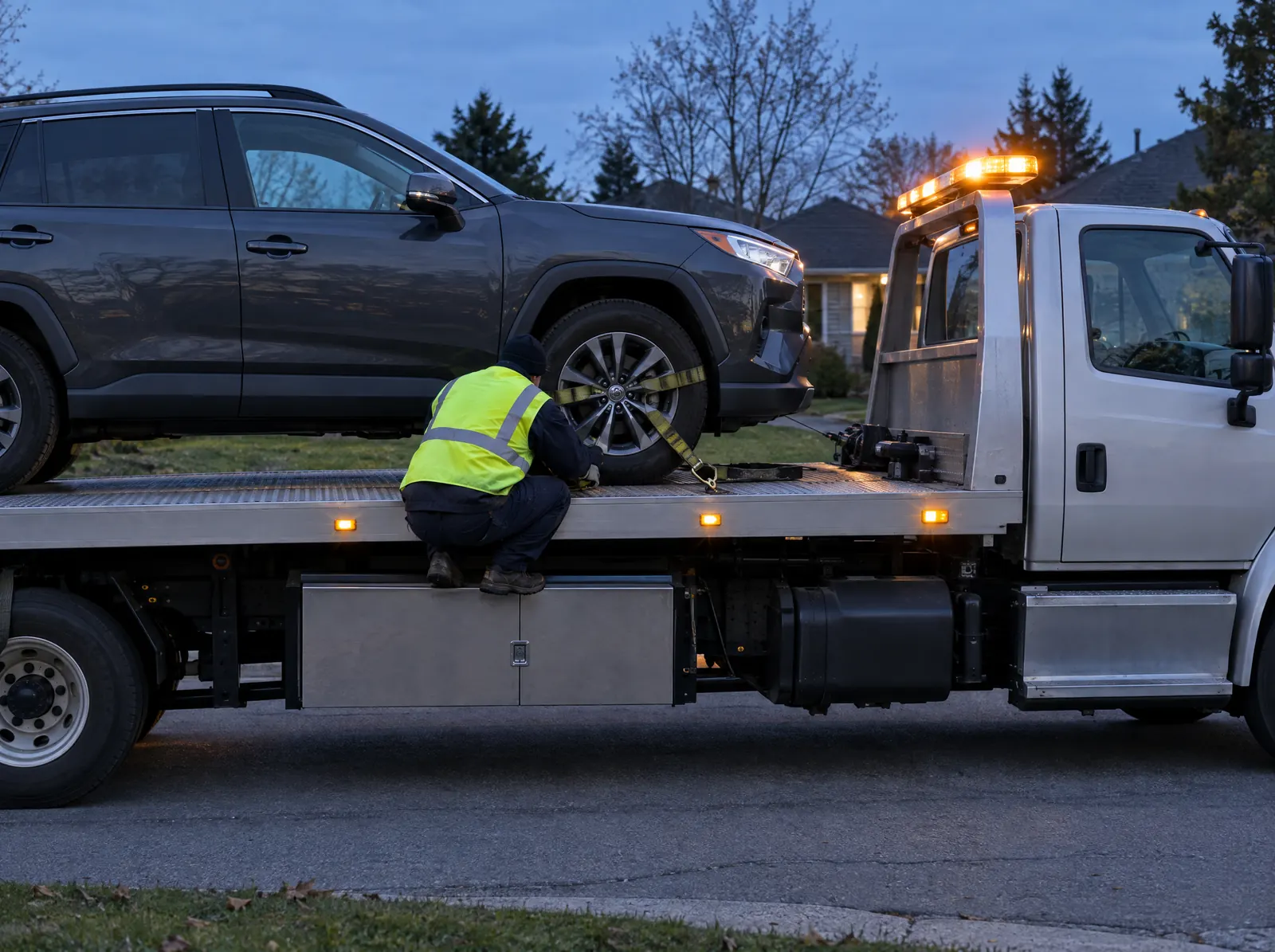
- What you drive. An all-wheel-drive SUV or a lifted pickup may need a flatbed, no matter the neighborhood.
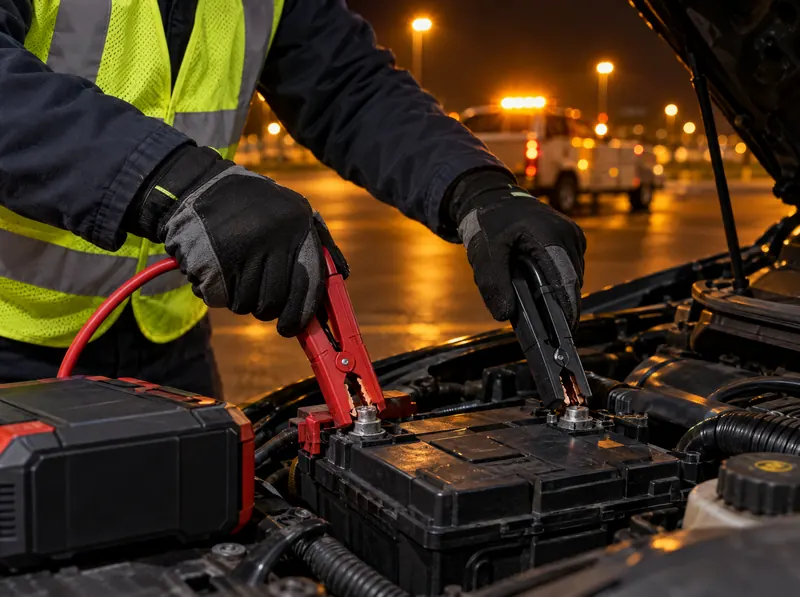
And a short tow may not be needed at all. A dead battery in a driveway in the Irish Channel may only need a jump start. That's a smaller job than a tow anywhere in the city.
What should I say when I call so the price fits?
Your price is texted to you before anyone is sent, so give clear details up front:
- Where the car is. A street address, or the interstate, your direction and the last exit.
- Where it should go. The shop's name and address. Pick it before you call if you can.
- What happened. Won't start, won't crank, flat tire, out of gas, or a crash.
- What you drive. Make, model, and whether it's all-wheel drive.
- How it's sitting. In a lane, on the shoulder, at the curb, or off the pavement.
If the shop you want is across town, ask yourself if a closer one would work. That one choice changes the miles more than anything else you control.
What if the city towed my car to the Almonaster lot?
Sentinel doesn't do impounds or private-property tows. But this one comes up in the East. The city's main tow lot is at 400 N. Claiborne Avenue, under the expressway at Conti Street. Cars stored more than 24 hours go to the impound lot at 10200 Almonaster Avenue, in the East. Call (504) 658-8100 to confirm a city tow.
The city may tow right away for public safety. That includes parking on a sidewalk, in a bike lane, in a crosswalk, or within 15 feet of a hydrant. Our New Orleans impound lot guide covers the steps. If the car won't start once it's released, that's a regular tow from the lot to your shop, and we can help with that.
How does Sentinel price a tow?
Sentinel Towing is a towing and roadside network. A vetted local partner tow company does the job. You tell us the pickup spot, the drop-off spot, your vehicle and what went wrong. We text you a price before dispatch, and that price is the most you pay for the job. If the job changes, we text a new price first and you decide. Then we stay with you by text until help arrives. That's our Stay-With-You Promise.
For a regular haul to a shop, see car towing. For the bridges, exits and neighborhoods we cover, see the New Orleans towing page.
Stuck right now? Call 1-888-TOW-1213, or request help online.
New Orleans East and Uptown Tow Questions
Why did my tow from New Orleans East cost more than my friend's Uptown?
Most often it's the miles. The East stretches about 20 miles of I-10 past the Superdome exit. If the car went to a shop near the center of town, that's a longer haul than a short trip Uptown.
Can I get a tow on I-10 past Michoud Boulevard?
Yes. Tell the dispatcher your direction and the last exit you passed. After Michoud, the next open exit is 254 at US 11, so your driver may need to turn around to reach your side.
Does the price change if I pick a shop across the river?
It can, since the trip gets longer. Give us both addresses when you call. Your price comes by text before anyone is sent, and it covers the trip you asked for.
Do you pick up cars from the city impound lot on Almonaster Avenue?
We don't handle impound releases. Once the city releases your car, a tow from the lot to a shop is a normal job. Call us when the car is yours again.
Rules change, so check the official source before you rely on it. Sources: City of New Orleans: find my towed vehicle, City of New Orleans: towing rules, U.S. Fish and Wildlife Service: Bayou Sauvage, Department of the Interior, New Orleans RTA: St. Charles streetcar, R.S. 32:141, R.S. 32:125, I-10 exit list.