How-to
What to Do About a Weak Battery in Grande Prairie, From the Bypass to Bear Creek
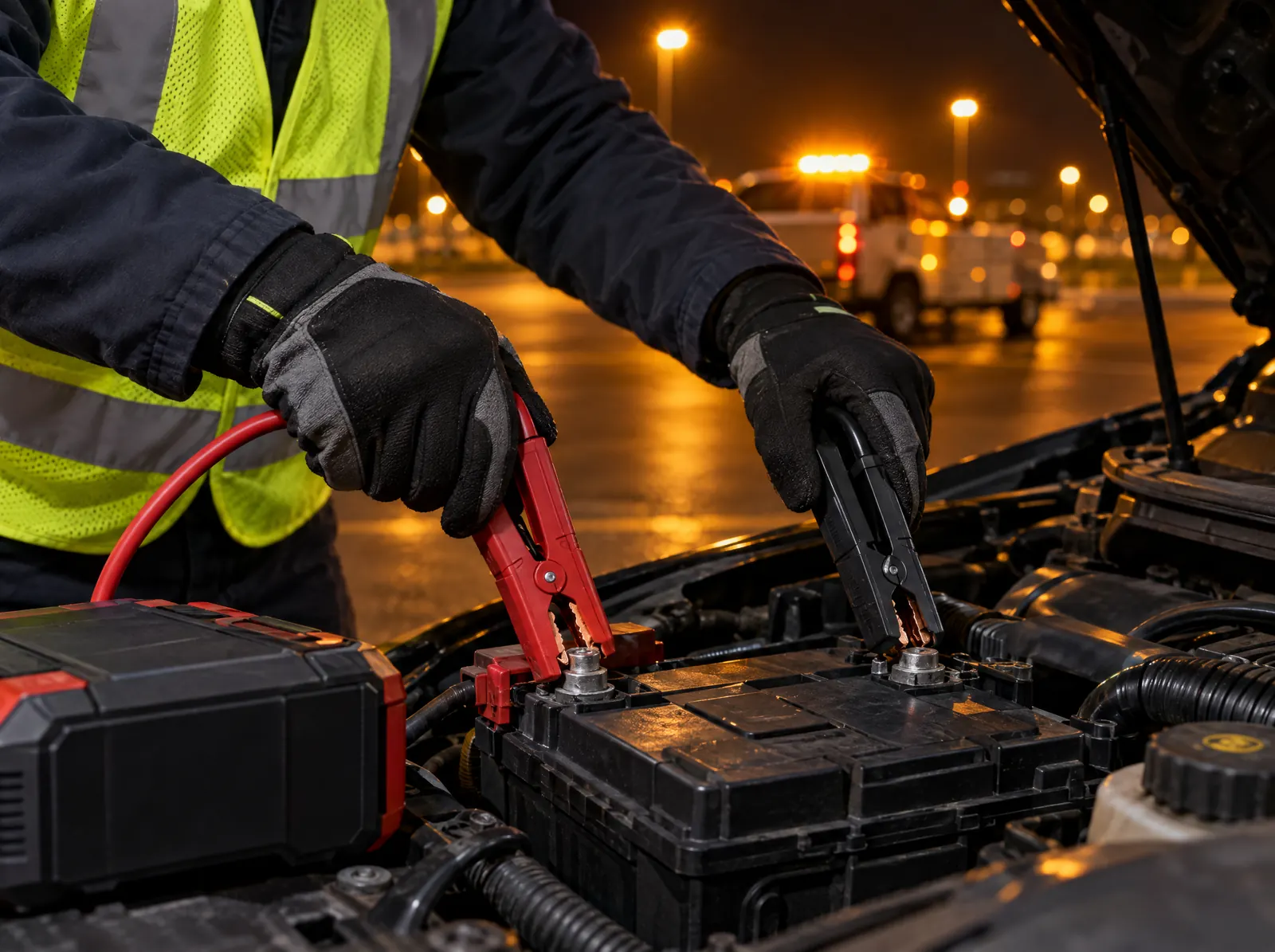
A weak battery in Grande Prairie gives you a warning before it quits: a slow crank, dim lights or a clicking start. If the car is running, don't shut it off in a bad spot. Drive it somewhere safe, like home, a lit lot or a shop. If it won't start, call for a jump start and say exactly where you are. On the Highway 43 bypass, that means the nearest junction, not a street name.
How can you tell a battery is weak, not dead?
A dead battery gives you nothing. A weak one still tries. Here are the signs you see first on a cold Grande Prairie morning:
- The engine turns over slowly. It sounds tired, like it's working through mud.
- The dash lights dim when you turn the key. They may flicker, then come back.
- You hear fast clicking. There's enough power for the starter switch, but not to spin the engine.
- It starts fine after a warm day, then struggles after a cold night. That pattern is a battery near the end.
- The battery light comes on while you drive. That can point to the charging system, not the battery itself.
Any of these means the next cold start could be the one that fails. Plan for it now, while you still have a car that runs.
Why do Grande Prairie winters finish off weak batteries?
The cold here is long and deep. Environment and Climate Change Canada's 1981 to 2010 normals for the Grande Prairie airport station put the average January low at minus 19 C. The low drops past minus 20 C on about 42 days in a typical year. It falls past minus 30 C on about 11.
Cold makes a battery give less. At the same time, winter asks more of it. Natural Resources Canada lists the extra load: heat, defrost, headlights, heated seats, heated mirrors and the washer pump. All of that runs off the electrical system, which gets its power from the engine.
So think about a short winter errand. You start the car at Prairie Mall, run the heater and defrost on high, and drive a few minutes home. The battery spent a lot on the start. It never got that power back. Do that all week and a weak battery is empty by Friday.
Should you turn the car off if the battery feels weak?
Not until you're somewhere you'd be fine being stuck. If it started once, it may not start again. Before you shut it off, ask yourself where you'd be waiting.
- Good places: your driveway, a lit parking lot, a gas station, a repair shop.
- Bad places: a bypass shoulder, a dark side road, a Priority 1 street during a parking ban.
While you drive, cut the load. Turn off heated seats, the rear defrost once the glass is clear, and anything plugged into the dash. Keep the headlights on, since other drivers need to see you. If you get home, a block heater and a battery check that week can save you a cold morning.
What if it dies on the Highway 43 bypass?
The bypass is four lanes. It wraps the northwest corner of the city, from the Four Mile Interchange to Highway 43 just west of the airport. It fully opened in September 2019. There are no houses or store signs to name. That's why your location needs a different kind of marker out there.
Use the junctions as your markers
The bypass has three main junctions you can name:
- The Four Mile Interchange with Highway 2, at the north end. It sits about 6 km north of 100 Avenue on 100 Street.
- The roundabout at Range Road 63, which is 116 Street.
- The 100 Avenue junction with Highway 40, near the airport at the west end.
Say which two you're between and which way you were headed. "Westbound, past the Range Road 63 roundabout, before 100 Avenue" is something a driver can find. "Somewhere on the bypass" is not. Your phone's map pin helps too. Read the GPS numbers out loud if you can.
Staying safe on the shoulder
Alberta rules let you stop on a provincial highway shoulder when your car can't move on its own power, or in an emergency. Pull as far right as you can. Turn on your hazards. Stay inside with your seatbelt on. If you're stopped in a live lane, or anyone is hurt, call 911 first.
Don't wait for a passing tow truck to pull over. Under Alberta rules, a tow truck driver must not stop on a highway within 200 m of a disabled car unless someone asks. You, as the driver, count as someone. So call. When your driver arrives with lights flashing, Alberta law makes traffic in the next lane move over, or slow to 60 km/h or the posted limit if lower.
What if it dies in town, near Muskoseepi Park?
Inside the city grid, things are simpler. Streets are numbered, so cross streets do the work. Muskoseepi Park runs along Bear Creek through the middle of town. If you're parked at a trailhead lot, name the lot and the nearest street and avenue.
Two city rules matter when a car won't start:
- Parking bans. When the City declares one, you can't park on Priority 1 or Priority 2 roads from 7 a.m. to 9 p.m., Monday to Friday. Priority 1 includes 100 Street, 84 Avenue, 68 Avenue and Resources Road. A car left there during a ban can be fined or towed under Traffic Bylaw C-1166. Call AccessGP at 311 to ask if a ban is on.
- The 72-hour limit. A car can sit on a residential street for 72 hours at most. After that, the City can treat it as abandoned and remove it.
Also note that the old Highway 43 route through town is now a City road. That's 100 Avenue, 108 Street, 116 Avenue and 100 Street. If your map app still calls it Highway 43, give the street name too.
Is a jump start enough, or do you need a tow?
A jump start works when the battery is low but healthy enough to hold a charge. After the jump, drive for a while, not just around the block. Head straight to a shop or parts store and have the battery tested.
A jump won't fix everything. You likely need a tow when:
- The car starts with a jump but dies again soon after.
- The battery light stays on while you drive.
- The battery case is cracked, bulging or leaking.
- You smell burning or see smoke under the hood.
One more trap. If your key fob battery is weak too, the fob may not open the doors from outside. Don't leave the keys in the car while you step out. If it happens, a car lockout service can get you back in.
Who shows up when you call Sentinel?
Sentinel Towing is a towing and roadside network. We don't own trucks. A vetted local partner tow company does the job. We lock your price by text before dispatch, send your driver's name and photo, and check in by text until help arrives. That's the Stay-With-You Promise. For roads, collisions and areas around the city, see our Grande Prairie towing page.
How do you keep a weak battery going this winter?
Alberta's winter driving tips say to winterize your car, and the battery is on that list. Get it tested in fall, before the first cold snap. Other steps that help:
- Plug in with a timer. Natural Resources Canada says to set a block heater timer to turn on 2 hours before you start the engine.
- Skip the long idle. The same guide says idling past 30 seconds doesn't help the vehicle. Driving for a few minutes warms it faster.
- Carry booster cables. They're on Alberta's winter road kit list.
- Keep the tank more than half full. Alberta advises it in winter. If you get stranded, you have fuel to run the heater now and then.
- Check the roads first. Before a trip on Highway 43 or 40, check 511 Alberta or dial 5-1-1.
Stuck right now? Call 1-888-TOW-1213, or request help online.
Grande Prairie Weak Battery Questions
My car cranks slowly but still starts. Can I keep driving it?
For now, yes, but treat it as a warning. Drive straight to a shop for a battery test. Avoid turning it off anywhere you'd hate to be stuck, like a bypass shoulder.
How do I tell a driver where I am on the bypass?
Name the two junctions you're between: the Four Mile Interchange, the Range Road 63 roundabout or 100 Avenue. Say which way you were driving. Share your phone's map pin if you can.
My battery died on 100 Street and there's a parking ban. What happens?
100 Street is a Priority 1 road. During a ban, cars there can be fined or towed from 7 a.m. to 9 p.m. on weekdays. Get a jump start or a tow before ban hours if you can.
Will a block heater save a weak battery?
It makes cold starts easier, so the battery works less. Natural Resources Canada suggests a timer set to come on 2 hours before you drive. A battery that won't hold a charge still needs replacing.
Rules change, so check the official source before you rely on it. Sources: Environment and Climate Change Canada climate normals, Natural Resources Canada cold weather fact sheet, Alberta winter driving tips, Alberta Use of Highway and Rules of the Road Regulation, Alberta roadside worker safety, City of Grande Prairie parking bans, City of Grande Prairie priority roads, City of Grande Prairie traffic and parking, 511 Alberta.