How-to
North of Fort McMurray on Highway 63: What Actually Helps When You Break Down
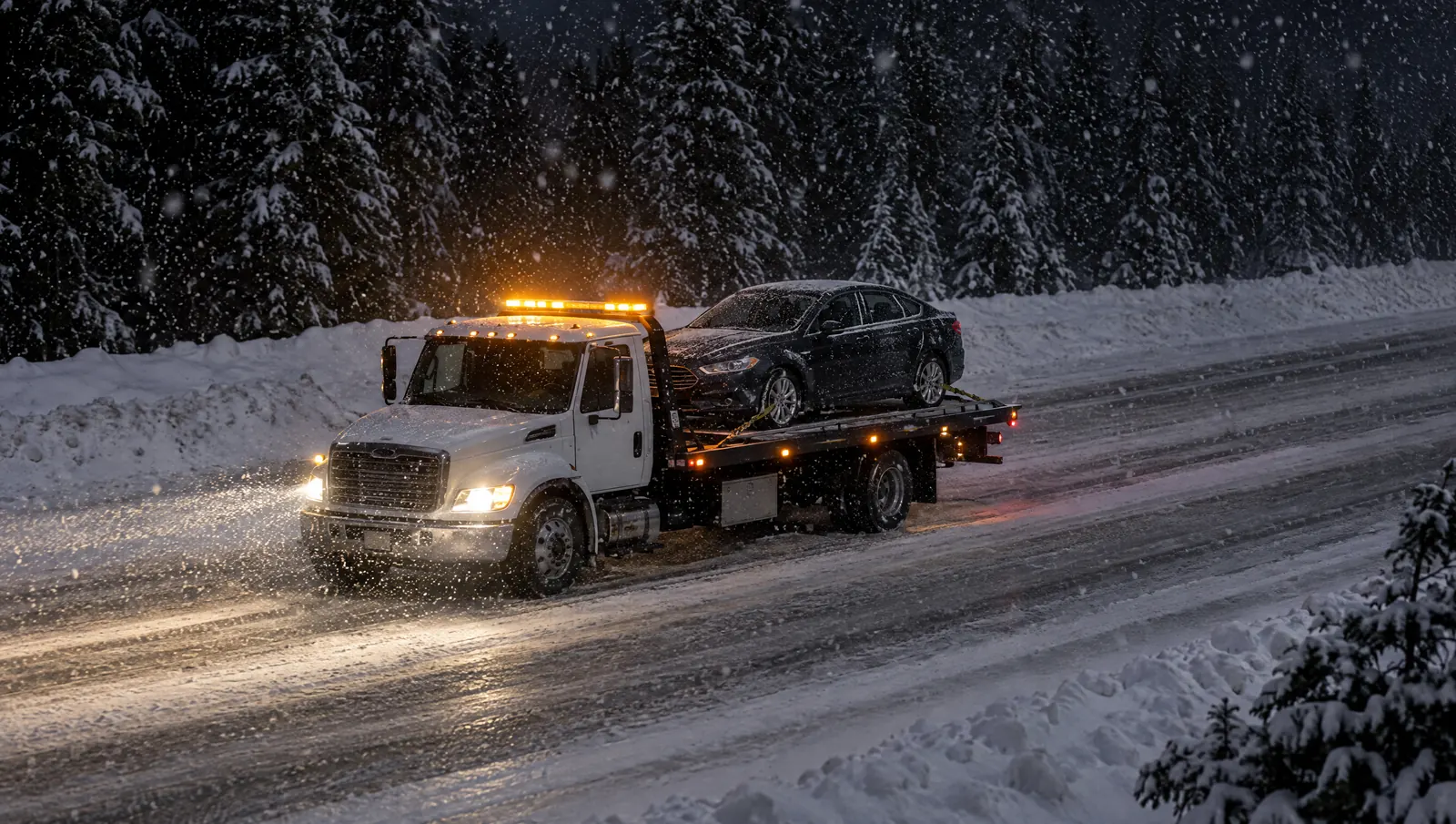
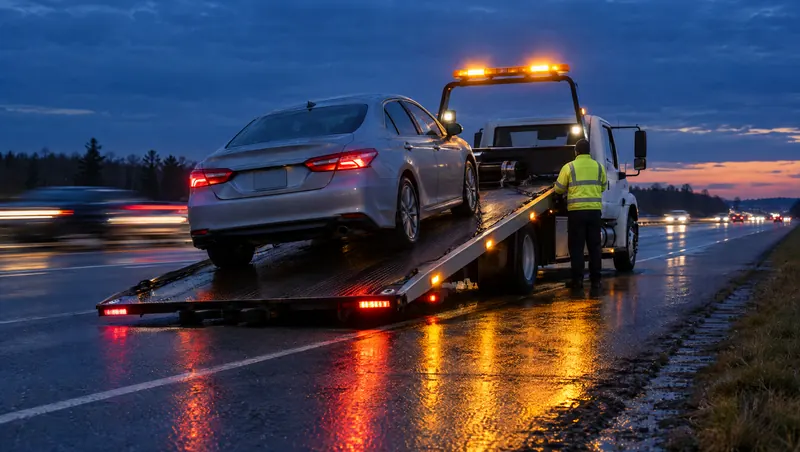
If your car quits on Highway 63 north of Fort McMurray, on the way to Suncor, Syncrude or Fort McKay, don't sit and wait for a passing truck. Alberta law stops a tow truck from pulling over near you unless someone asks. Get onto the shoulder, turn on your hazards, stay inside and call for help yourself. Call 911 first if anyone is hurt or your car is stuck in a live lane.
What does Highway 63 look like north of the river?
Most people know 63 as the road south to Edmonton. North of the Athabasca, it's a different drive. It's the road to work for a lot of Fort Mac.
Once you cross the Athabasca bridges, the highway runs past three interchanges in town:
- Thickwood Boulevard
- Confederation Way
- Parsons Access Road, which is Highway 686
After Parsons Creek, the town falls behind you. The divided highway follows the west bank of the Athabasca north. You pass the Suncor interchange first, then Syncrude's Mildred Lake site. Next comes the Fort McKay Road, then the Peter Lougheed Bridge across the Athabasca. Fort McKay itself sits about 54 km north of town by this route.
That order matters. It's the list you'll use to tell someone where you are.
Why won't someone just stop and help?
On a busy morning, dozens of trucks and pickups may roll past your car. It feels like someone will pull over. Often no one does.
Part of that is the law. A 2025 change to Alberta's road rules says a tow truck driver must not stop on a highway within 200 m of a disabled car. The exceptions are when a peace officer, emergency crews, or the owner or driver asks for help. So a tow truck heading to the plants can't just pull in behind you. You have to make the request.
The rest is human. Workers heading north have a shift to start. Workers heading south just finished one. Few drivers want to stop on a fast highway in the dark. Your plan has to work even if every car keeps going.
That plan is simple: call, give a clear location, and stay put. A tow truck near you only comes once someone asks for it.
How do you give your location north of town?
The highway is divided, so your direction is half the answer. A driver on the wrong side may have to go a long way to turn around.
When you call, say these three things:
- Which way you were going. Northbound to the plants, or southbound back to town.
- The last place you passed. Parsons Access Road, the Suncor interchange, Mildred Lake, the Fort McKay Road or the Peter Lougheed Bridge.
- About how far past it. Read your trip meter or guess in kilometers. Close is good enough.
If your phone shows a map, drop a pin and share it. Then watch for your driver on the tracking link we text you. You'll know which side of the median they're on.
Where should you stop if the car starts to fail?
Alberta's rules let you park on the shoulder of a provincial highway when your car can't move on its own or an emergency comes up. A failing car counts.
- Signal early. Ease right. Don't brake hard in the lane.
- Get all four tires past the white line if you can.
- Try not to stop on a bridge. Alberta says bridge decks are often slicker than the rest of the road.
- Set the parking brake and turn on your hazards.
Then stay buckled in your seat. If smoke or fire means you must get out, move well away from traffic.
Drivers who pass a stopped car with flashing lights must move to the far lane. If they can't, they must slow to 60 km/h or the posted limit, whichever is lower. That rule helps, but don't trust every driver to follow it.
What if you're stuck waiting in the cold?
This is where northern breakdowns get serious. Environment and Climate Change Canada's normals for the Fort McMurray airport show lows below minus 30 C on about 21 days a year. Wind chill drops below minus 30 on about 40 days.
The Government of Alberta says to stay inside your car and call for help. Its advice for waiting it out:
- Run the engine now and then to stay warm.
- Check that snow isn't blocking the exhaust pipe. Exhaust fumes can build up inside.
- Open a window a little on the side away from the wind.
- Stay in the car. At minus 40, the province says frostbite can set in fast, even on short trips outside.
Don't try to walk to a plant gate or back toward Parsons Creek. The shoulder of a fast highway is the worst place to be on foot.
What should be in your car before you head north?
Alberta's winter driving page lists what to check before the cold comes. That includes your tires, your spare, your battery, your heater and your defroster. It also says to keep your gas tank more than half full, since a full tank helps if you get stranded.
The province's kit list is long. For the drive to the plants, these matter most:
- A warm blanket, plus extra clothing and boots
- A flashlight with spare batteries
- Food that won't spoil
- A small shovel and sand or non-clumping kitty litter
- Booster cables, an ice scraper and a snow brush
- A charged cell phone and a charger
The province also suggests a buddy system. Tell someone where you're going and when you expect to get there. If you're driving alone to an early shift, a text to someone at home costs nothing.
Which problems can be fixed right there?
Not every stop needs a tow. Here's what a partner can often do on the shoulder or in a lot:
- Dead battery: a cold soak at a camp or park-and-ride lot is the classic one. Ask for a jump start.
- Flat tire: if your spare is good, your driver can put it on. See flat tire change.
- Keys locked inside: easy to do when you're tired after a long shift. Ask for a car lockout.
- Slid into the ditch: if the car isn't damaged, a winch-out can pull it back onto firm ground near the road.
- Won't drive at all: you need car towing to a shop in town.
If you stopped inside a plant gate or a work camp, tell us that when you call. Sites have their own gates and rules. If a tow truck can't get in, we'll say so on the call.
What about past Fort McKay and the winter road?
In winter, 63 keeps going as a winter road to Fort Chipewyan. The Regional Municipality of Wood Buffalo says there's no road patrol, no gas stations and no cell coverage out there. It recommends a high-clearance 4x4. As of today, the region lists the road as closed for the season.
When it opens, check the Winter Road Hotline at 1-866-743-6111 before you go. Don't plan on a local tow out there. Sentinel only does local, light-duty work.
How does Sentinel work on this stretch?
Sentinel Towing is a towing and roadside network. We don't own trucks. A vetted local partner tow company does the job. We text you a locked price before anyone is dispatched. Then we send your driver's name, photo and truck, and check on you by text until help arrives. That's the Stay-With-You Promise. For in-town roads, neighborhoods and parking rules, see our Fort McMurray towing page. For the long drive south, read our guide to breaking down on Highway 63 near Fort McMurray.
Stuck right now? Call 1-888-TOW-1213, or request help online.
Highway 63 North Questions
A tow truck drove past me near Syncrude. Can I flag it down?
You can ask, but don't count on it. Alberta's rules keep a tow truck from stopping within 200 m of a disabled car unless the driver, police or emergency crews ask. The surest way is to call for help yourself.
My car died in a camp parking lot. Can you reach it?
Call and tell us the camp name and where your car is parked. Some sites have gates and security rules. If a partner can get to you, we text your price before anyone comes.
Should I keep the engine running while I wait?
Alberta says to run it now and then to stay warm. First check that snow isn't blocking the exhaust pipe. Crack a window on the side away from the wind for fresh air.
How do I know if 63 is closed before I drive north?
Check 511 Alberta, the free road service run by the Government of Alberta. You can also dial 5-1-1 from inside the province. For the Fort Chipewyan winter road, call the region's Winter Road Hotline.
Rules change, so check the official source before you rely on it. Sources: Alberta Use of Highway and Rules of the Road Regulation, Alberta roadside worker safety, Alberta safer winter highways, Alberta extreme cold advice, RMWB winter roads, 511 Alberta, Environment and Climate Change Canada climate normals.