Safety
Breaking Down After Dark in Anchorage's Long Winter Night
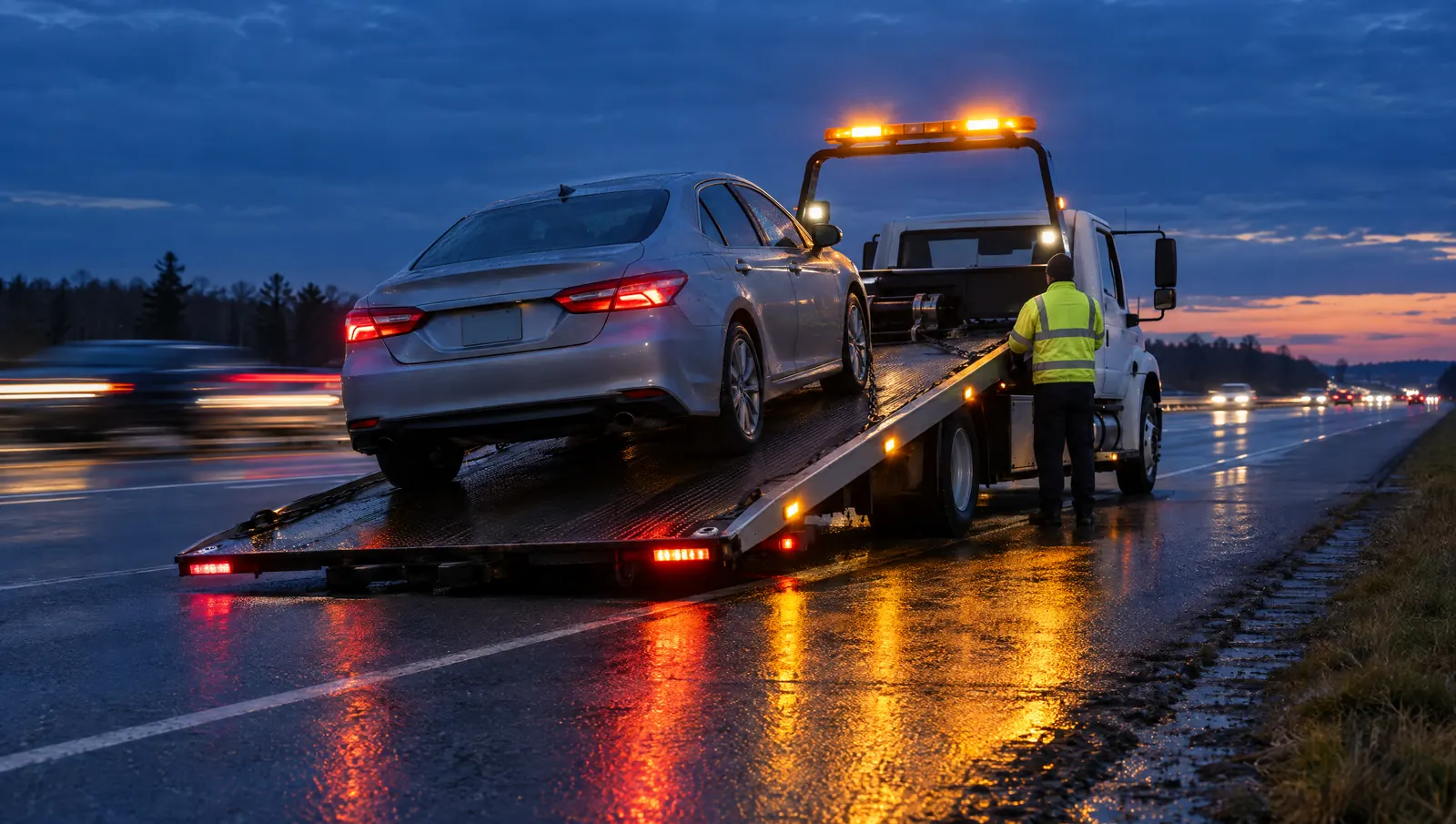
In Anchorage, a winter breakdown usually happens in the dark. By mid-November the sun sets before 4:30 p.m., and around December 21 you get about five and a half hours of daylight. So plan to be seen and stay warm. Keep your lights and hazards on, stay in the car if it's off the road, watch for moose, and call for help at any hour.
When does the dark catch Anchorage drivers?
Earlier than most people expect. The change comes fast in the fall, and the clock change makes it worse. Here's what the US Naval Observatory shows for downtown Anchorage this season:
| Date | Sunrise | Sunset |
|---|---|---|
| October 15 | 8:43 a.m. | 6:47 p.m. |
| November 2 | 8:31 a.m. | 4:54 p.m. |
| November 15 | 9:06 a.m. | 4:21 p.m. |
| December 21 | 10:14 a.m. | 3:41 p.m. |
| January 15 | 9:57 a.m. | 4:22 p.m. |
| February 15 | 8:42 a.m. | 5:47 p.m. |
Clocks fall back on November 1. From then on, the sun sets before 5 p.m. That week, the drive home goes dark for a lot of people for the first time.
By mid-November, both ends of a normal workday are dark. Your car dies on the Glenn on the way to work at 8 a.m.? It's still night. A tire goes flat on Minnesota Drive after a 5 p.m. shift? Also night. Even at noon in late December, the sun sits low and the light is thin.
What should you do the moment your car quits in the dark?
Get off the road if the car still rolls. Take the next exit on the Seward, or pull into a lit lot off Tudor Road. A parking lot with lights beats a dark shoulder every time.
If it stops where it stops, do this in order:
- Hazards on right away. Other drivers see a dark car late.
- Keep your headlights or parking lights on if the battery can take it. A car with lights reads as a car, not a shadow.
- Note your spot before you call. The last exit sign, a mile marker, a cross street or a business sign.
- Stay buckled in. Get out only if the car is in danger, or you can walk well away from traffic.
If anyone is hurt, or your car sits in a live lane with no way out, dial 911 before anything else. Sentinel is not an emergency service.
Why does your location matter more in the dark?
At night, the landmarks you'd use in daylight disappear. On the Glenn, one stretch past Joint Base Elmendorf-Richardson looks a lot like the next. On the Seward freeway, the exits for Tudor, Dowling, Abbott and De Armoun come up quick. Part of the Minnesota Drive expressway runs on O'Malley Road, so it's easy to mix up which road you're on.
So give the driver more than "on the Glenn." Say which way you were heading. Say the last exit you passed. Say what you can see: a sign, a gas station, a lit overpass. If your phone shows a pin, share it. A clear spot means less searching in the dark for you and your driver.
How do you stay seen while you wait?
Alaska's headlight rule, 13 AAC 04.010, says lights must be on from half an hour after sunset to half an hour before sunrise. They must also be on any time people or cars can't be seen clearly at 1,000 feet. Snow, fog and ice fog all count. Some roads, like stretches of the Seward and the Parks, have posted signs that require headlights at all times.
That rule is for driving, but the idea holds when you're stopped. Be easy to spot. The National Weather Service gives drivers stuck in winter a few simple tips:
- Turn on the dome light at night when the engine is running.
- Tie a bright cloth, red if you have it, to your antenna or door.
- Once the snow stops, raise the hood to show you need help.
Alaska's move-over law, AS 28.35.185, protects your tow truck while it hooks up a car with its lights flashing. Drivers must leave the lane next to it on a road with two or more lanes their way. That rule does not cover you on foot. Stay out of the lane.
How do you stay warm without hurting yourself?
The cold is the second danger after the dark. The weather service says to stay with your car, since you can get lost fast in blowing snow. It also says to run the motor for short spells each hour for heat, not nonstop.
- Clear the tailpipe first. Snow around the exhaust can push gas into the cabin.
- Crack a window a little while the motor runs, for fresh air.
- Save the battery. If the car won't start again, a dead battery means no heat and no lights. Short runs beat a long idle.
- Layer up. Hat, gloves, a blanket. Keep them in the car from October on.
If the car is dead and cold, a jump start may get you moving. If it slid off the road into a plow berm, ask about a winch-out near the road.
Why are moose a bigger risk after dark?
The Alaska Department of Fish and Game lists Anchorage among the places with the highest rates of moose crashes. The reasons line up with the dark season:
- Moose move most around sunrise and sunset. In fall and winter, those are your commute hours.
- Long nights and dim days make them hard to spot.
- As snow gets deep, moose walk the plowed roads because it's easier.
- Crashes go up at dusk and dawn and peak in winter.
Fish and Game's tips are simple. Keep your windshield and headlights clean. Scan both sides of the road. If you see one moose, slow down, because a calf may follow. Watch for oncoming headlights that flicker. That can mean an animal is crossing between you. Leave more room behind the car ahead.
See a moose on or near the road? Give your hazards a quick flash to warn drivers behind you. If you hit one, call 911 or the police, even if it seems minor. Fish and Game says those reports help road planners. Don't go near a hurt animal. When everyone is safe, call for a tow if the car can't be driven.
Can you get a tow in the middle of the night?
Yes. You can call any hour, any day. Sentinel Towing is a towing and roadside network, not a tow company. A vetted local partner tow company near you does the job. We text your price before we dispatch, and that price is the most you pay. Then we keep checking on you by text until your driver pulls up. That's our Stay-With-You Promise.
In the dark, it helps to know which lights are yours. You get your driver's name, photo and truck by text, and you can track your truck on a map. No guessing which set of headlights is coming for you.
Before you head out on a dark, snowy night, check Alaska 511 for closures on the Glenn and the Seward. A partner may not reach Turnagain Arm, Girdwood or the Mat-Su that night. We check before we quote, and we tell you if no one can get there. For the areas partners cover, see our Anchorage towing page.
Stuck right now? Call 1-888-TOW-1213, or request help online.
Anchorage After Dark Questions
Is it safer to wait in my car or outside in the dark?
Most of the time, in the car with your belt on. The weather service says to stay with your car in winter storms. Get out only if the car is in danger, or you can walk well away from traffic.
Do I have to keep my headlights on when it's dark at 4 p.m.?
When you drive, yes. Alaska requires lights from half an hour after sunset to half an hour before sunrise. In late December, the sun sets before 4 p.m. in Anchorage. So your lights will be on for most of the day.
I hit a moose in the dark. Who do I call first?
Call 911 or the police, even if the crash seems small. Stay away from the moose. Once everyone is safe, call us for a tow if the car can't be driven.
How do I tell my driver where I am on a dark highway?
Give your direction, the last exit you passed and anything you can see, like a sign or a lit overpass. Share your phone's map pin if you can. You'll get your driver's details by text so you know which truck is yours.
Rules change, so check the official source before you rely on it. Sources: US Naval Observatory sun data, Alaska DOT&PF headlight rules, ADF&G Driving in Moose Country, ADF&G winter moose safety, National Weather Service winter safety, AS 28.35.185, Alaska 511.