Safety
Breaking Down on Highway 63 Near Fort McMurray: What to Do, Kilometer by Kilometer
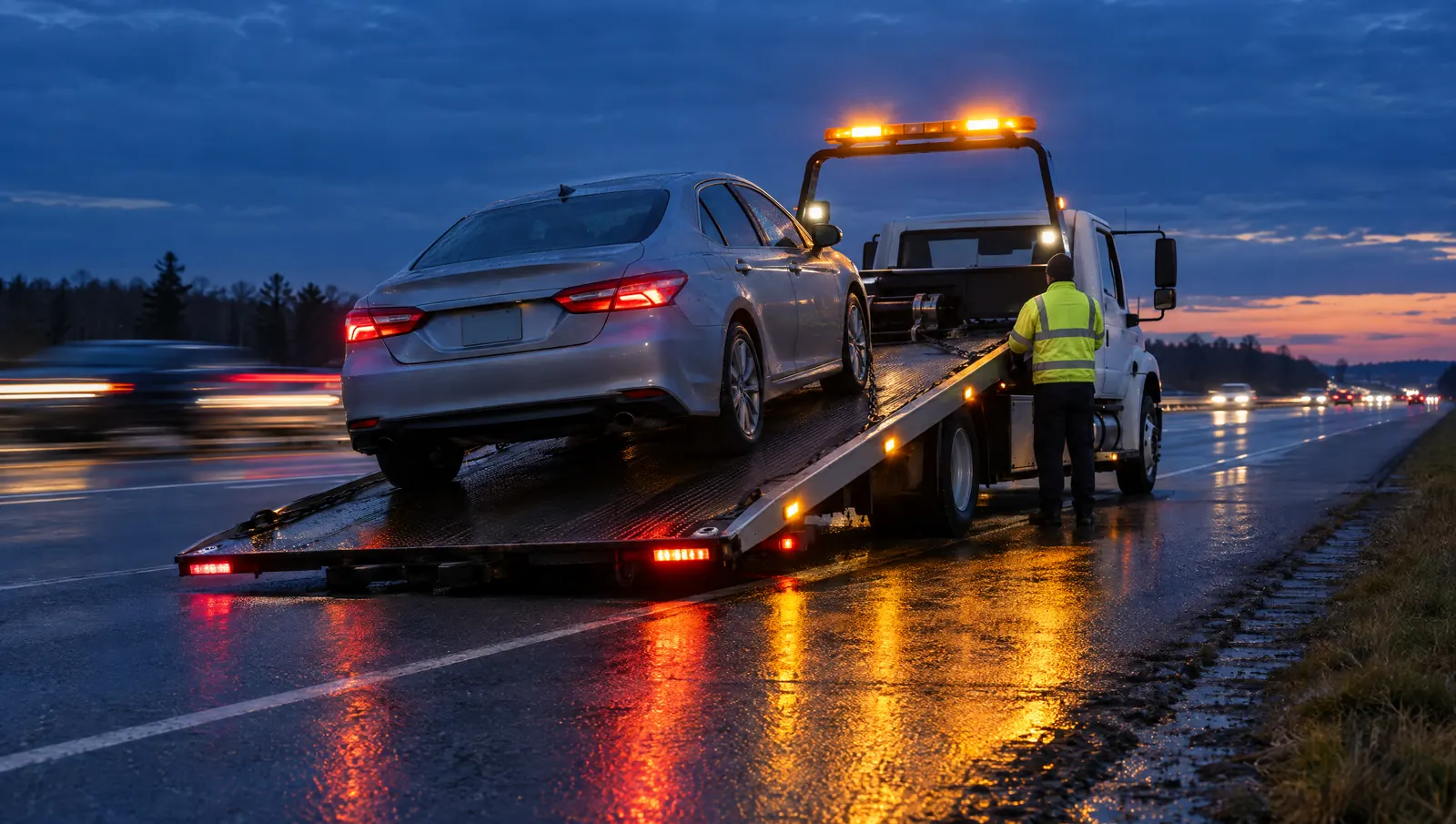
If your car quits on Highway 63 near Fort McMurray, get as far onto the right shoulder as you can, turn on your hazards and stay buckled inside. Note which way you were headed and the last place you passed, like the Highway 881 turnoff or Mariana Lake. Then call for help right away. Call 911 first if anyone is hurt or your car is stuck in a live lane.
Why is a breakdown on Highway 63 different?
Highway 63 is the only highway that links Fort McMurray to Edmonton. Everyone uses it. Camp workers, families heading south for the weekend, and trucks hauling huge loads to the plants all share the same lanes.
In 2012, so many people pushed for a safer road that the province named a special advisor. Residents held rallies, wrote letters and joined a telephone town hall. The result was a report called "Towards a Safer 63." Its numbers still explain what goes wrong out there.
- Animals: provincial data showed 36.9 percent of crashes on 63 involved wildlife. That was the biggest single cause.
- Head-on crashes: these caused the largest share of deaths, back when much of the road was two lanes.
- Tired drivers: the report pointed to fatigue, boredom and heavy traffic on shift-change days.
The 240 km from Grassland to Fort McMurray is now twinned, with the work done in 2016. A median splits the two directions. That cut the head-on risk, but it changed how you get help, as you'll see below.
Where should you stop if your car starts to fail?
Alberta's rules say you can't park on the shoulder of a provincial highway unless your car can't move on its own or there's an emergency. A dying engine counts. A nap does not.
If the car is still rolling, use that time well:
- Signal early and drift right. Don't brake hard in the lane.
- Aim for a wide spot, a pullout or a rest area if one is close.
- Get every tire past the white line if you can.
- Turn your wheels away from the road and set the parking brake.
Inside town, the rules get tighter. The Regional Municipality of Wood Buffalo bans stopping on any bridge. If you lose power while crossing the Athabasca, coast off the far end if you possibly can.
Out on the highway, stay in your seat with your belt on. The traffic beside you can be a loaded semi or a wide load moving past. Only get out if smoke, fire or a crash means the car isn't safe, and then step well away from the road, behind the guardrail if there is one.
How do you tell a dispatcher where you are on a twinned highway?
This is the part most drivers get wrong. On a divided highway, "I'm on 63 near Mariana Lake" isn't enough. A truck on the wrong side of the median may have to drive a long way to turn around.
Give three things:
- Your direction: northbound to Fort Mac, or southbound to Edmonton.
- Your last landmark: the Highway 881 junction, Mariana Lake, Wandering River, or a plant gate north of town.
- How far past it: a guess in kilometers from your trip meter works fine.
If your phone has signal, share a map pin too. We text you a link so you can track your truck as it comes, and you can see it coming from your side of the median.
What is the long stretch south of town like?
Head south past the Highway 881 junction near Anzac and you hit the emptiest part of the drive. It's nearly 180 km from that junction to Wandering River. Mariana Lake is the only place named on the map in between.
That gap shapes every choice. Leave Fort McMurray with a full tank, a charged phone and a warm coat, even in October. If the gauge drops faster than you planned, don't push it to empty. Pull off while you still have power to steer, and ask for fuel delivery to get you to the next pump.
The 2012 report also said people felt parts of 63 were poorly served by emergency crews, with long waits after crashes. Things may have changed since then. Still, plan as if help could take a while to reach the middle of the stretch. That's why you stay in the car with the heat and the hazards on.
If 63 is closed by a crash or a fire, Highway 881 is the other road. It runs from Lac La Biche up through Anzac to the south side of Fort McMurray. Check 511 Alberta before you pick one, or dial 5-1-1 from inside the province.
Why is October moose season on Highway 63?
Right now is the worst time of year. Alberta says the moose rut runs from late September to mid or late October. During the rut, moose move around day and night, not just at the edges of the day.
Highway 63 runs through boreal forest and crosses river after river. The province says moose favor rivers, streams and wetlands, and are most active around sunset and sunrise. For a lot of shift workers, that's exactly when they drive.
How to avoid hitting one
- Watch the ditches, not just the lane. Moose step out from cover.
- If cars ahead slow for no clear reason, slow too. An animal may be on the road.
- Oncoming headlights can hide an animal at night. Ease off when a truck passes.
- See one moose? Look for a second. A cow often has a calf behind her.
- Don't honk at it. Alberta warns a moose may charge your car.
- If it's in your path, brake firmly and don't swerve.
One surprise from the province: more wildlife crashes happen on clear days with bare roads. Drivers relax. Don't.
If you do hit an animal, call 911 if anyone is hurt or the animal is blocking a lane. If the car won't drive after a strike, it needs a tow, not a jump.
Is it safe to drive 63 right after a long shift?
The 2012 report named Thursday and Sunday as shift-change days. On those days, many drivers hit the highway right after a 12 hour shift at the oil sands. The province's own words: being awake for 17 to 19 hours is like driving with a blood alcohol content of 0.05%.
Tired drivers also break down in worse spots. They miss the warning light, run the tank too low, or drift onto the shoulder and into soft ground. If your car slides off and sits stuck but undamaged, a winch-out can pull it back onto firm ground.
So sleep before you drive. If your eyes keep closing, pull into a rest area and stop. A dead car at a rest area is a far better problem than a dead car on the shoulder at dusk.
Why won't a passing tow truck stop to help?
A 2025 change to Alberta's rules says a tow truck driver must not stop on a highway within 200 m of a disabled car unless someone asks. That can be a peace officer, emergency crews, or you, the driver. A truck that rolls past isn't being rude. It's following the law. You have to make the call.
Once a truck stops with its lights on, the law protects you both. Drivers in the closest lane must move over. If they can't do it safely, they must slow to 60 km/h or the posted limit, whichever is lower. Breaking that rule can cost a fine and 3 demerits.
Winter adds one more hazard. Environment and Climate Change Canada's normals show fog or ice fog at the Fort McMurray airport on about 20 days a year. In fog, keep your hazards on the whole time you wait.
Who comes when you call Sentinel?
Sentinel Towing is a towing and roadside network. We don't own trucks. A vetted local partner tow company does the job. We text you a locked price before anyone is dispatched. Then we send your driver's name, photo and truck, and keep checking on you by text until help arrives. That's our Stay-With-You Promise. We do local, light-duty work, so tell us exactly where you are and we'll say on the call if a partner can reach you. For in-town interchanges, neighborhoods and winter parking, see our Fort McMurray towing page.
Stuck right now? Call 1-888-TOW-1213, or request help online.
Highway 63 Breakdown Questions
Should I walk to Mariana Lake or Wandering River for help?
No. Those spots are far apart, and the shoulder is no place to walk. Stay in your car with your belt on and your hazards flashing. Call for help, and call 911 if anyone is hurt.
I'm southbound but the tow truck is coming from Fort McMurray. Does that matter?
Yes. Highway 63 is divided, so your driver may need to turn around to reach your side. Say your direction and your last landmark when you call. Then watch the truck on the tracking link.
Can I leave my car on the shoulder of 63 overnight?
Only if it truly can't move or there's an emergency. Alberta's rules allow parking on a provincial highway shoulder in those cases. It's a place to leave as soon as you can, not a place to store a car.
How do I check if Highway 63 is closed before I leave?
Use 511 Alberta, the free service run by the Government of Alberta. It shows road conditions, incidents and over-dimensional loads. You can also dial 5-1-1 in Alberta.
Rules change, so check the official source before you rely on it. Sources: Towards a Safer 63 (Government of Alberta, 2012), Alberta moose safety, Alberta fatigue and driving, Alberta roadside worker safety, Alberta Use of Highway and Rules of the Road Regulation, 511 Alberta, RMWB parking rules, Environment and Climate Change Canada climate normals.