Safety
Ice Storm Breakdowns Near Tulsa: Stay Put, Look Up, Then Call a Wrecker
If your car quits in a Tulsa ice storm, coast it out of the travel lanes if it still moves. Turn on your flashers and stay inside with the doors locked. That's what ODOT advises. If you're stuck in a live lane or anyone is hurt, call 911 first. Then call for a wrecker. Don't walk off under iced trees or near a fallen line. And don't leave the car on a city street until the thaw. Tulsa says stuck, abandoned cars may be towed at the owner's expense.
What makes a Tulsa ice storm so dangerous for drivers?
An ice storm comes from freezing rain. The National Weather Service defines it as rain that freezes when it hits. It coats roads, walkways, trees and power lines. The weather service usually issues an Ice Storm Warning for around a quarter inch of ice or more. Under that warning, it strongly discourages travel.
Look back at December 2007. Freezing rain reached northeast Oklahoma late on a Saturday night and kept falling through Monday. The weather service office in Tulsa called it possibly the costliest ice storm in Oklahoma history. Over 200,000 homes went without power for several days.
Here's the part drivers forget. During that storm, ground temperatures stayed in the lower 40s. That kept most surface streets from getting too icy. The bridges and overpasses froze anyway, and that's where the travel trouble came from. Up above, rain froze in the trees and on the power lines. So in a Tulsa ice storm, watch two things: the bridge under your tires and the branches over your roof.
Which Tulsa roads get salted, and which don't?
Who treats your road depends on what kind of road it is. The City of Tulsa lays it out in its Snow and Ice FAQ.
| Road | Who treats it | What to expect |
|---|---|---|
| Main streets like 31st, 41st and Sheridan | City of Tulsa | First in line, worked until clear. |
| Public streets around hospitals and emergency sites | City of Tulsa | Also first in line. |
| Gilcrease Expressway (not the turnpike part) and L.L. Tisdale Expressway | City of Tulsa | City crews clear them. |
| Highways and their on and off ramps inside city limits | ODOT | State crews, not city crews. Think I-244, US-169 and the BA. |
| Downtown streets | City of Tulsa | Salt only, unless snow is deep and sticks around for days. |
| Neighborhood streets | Not on the city's list | Not treated. They would add about 3,000 more miles. |
A few more details from the city matter when your car won't go:
- Bridges and hills get pre-treated first. But when heavy rain falls before the ice, the city skips pre-treating, because rain washes the salt away. So a storm that starts as rain can freeze on a bare bridge.
- Main streets come back first. The city covers nearly 1,770 lane miles of them. Its FAQ says crews should have them clear 24 to 36 hours after a storm moves through. A quiet block in Maple Ridge stays icy until it melts.
- Ice means extra work. In an ice storm, the same city crews also have to clear fallen trees.
Your car died on an icy bridge or ramp. What now?
ODOT says bridges and ramps freeze first. It warns about black ice on them most of all. So that's where cars spin out and stall. Say your car slides and dies on the I-244 bridge over the Arkansas River. Here's the order that helps:
- If the car still steers, ease it out of the travel lanes. If it starts to slide, ODOT says to steer the way you're sliding and keep your feet off the gas and brake.
- Turn your flashers on.
- If you're stuck in a live lane or anyone is hurt, call 911 first. Sentinel is not an emergency service.
- Stay in the car with your doors locked and your seat belt on. Don't step out to look at the damage. The deck you'd stand on is ice.
- Then call for help. Say you're on a bridge, which way you were headed and the last exit you passed.
Oklahoma's Bernardo-Mills Law says passing drivers must move over or slow down for your flashing car and for the wrecker. On ice, a driver going by may not be able to do either. Stay buckled in until your driver has the scene set up.
Should you stay in the car or walk for help?
On a highway or a dark road, stay in the car. Both the weather service and ODOT say so. To stay warm safely:
- Run the engine in short bursts. The weather service says to run the motor for 10 minutes each hour for heat.
- Crack a window while it runs. Fresh air keeps carbon monoxide from building up inside.
- Check the tailpipe if you can do it safely. ODOT says ice and snow can clog it, and then fumes collect in the car.
- Make the car easy to spot. At night, turn on the dome light while the engine runs. Tie a bright cloth to the antenna or a door.
What about walking to a store or gas station?
In a parking lot, a warm building a few steps away can beat a cold car. Just look up before you go. In 2007, ice that froze in Tulsa's trees caused severe tree damage. A limb heavy with ice can snap with no warning.
Look down, too. ODOT says to treat any wire on the ground, or hanging from a pole, as live. Stay at least 300 feet away from it, and keep other people back. Never drive over a downed line, either. It can tangle in your car even if it's dead.
What if a line falls on your car?
Stay inside and call 911. Warn anyone nearby not to touch the car or the line. ODOT says to get out only for a fire or another threat to your life. If you must, jump clear so you never touch the car and the ground at the same time. Land with both feet together, then hop away with your feet together. Don't run.
Can you leave the car and come back after the thaw?
It's tempting to walk away and wait for the melt. The City of Tulsa warns against it. Its FAQ says cars that get stuck and are abandoned will be reported and may be towed at the owner's expense. The city also lists abandoned cars as a problem its salt trucks run into on their routes.
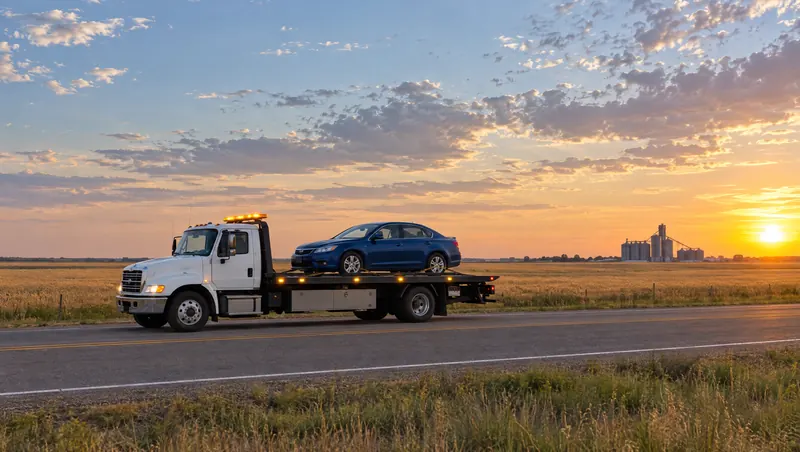
So get the car moved. A winch-out can pull a car that slid off an unsalted street into a ditch or a yard. The wrecker has to park on solid ground and reach the car with its cable, so tell dispatch if the street itself is bare ice. If the car won't start or can't be driven safely, it needs a car tow home or to a shop. Sentinel doesn't do impounds or private-property tows, so it's better to call before the city does.
What if the car won't start the morning after?
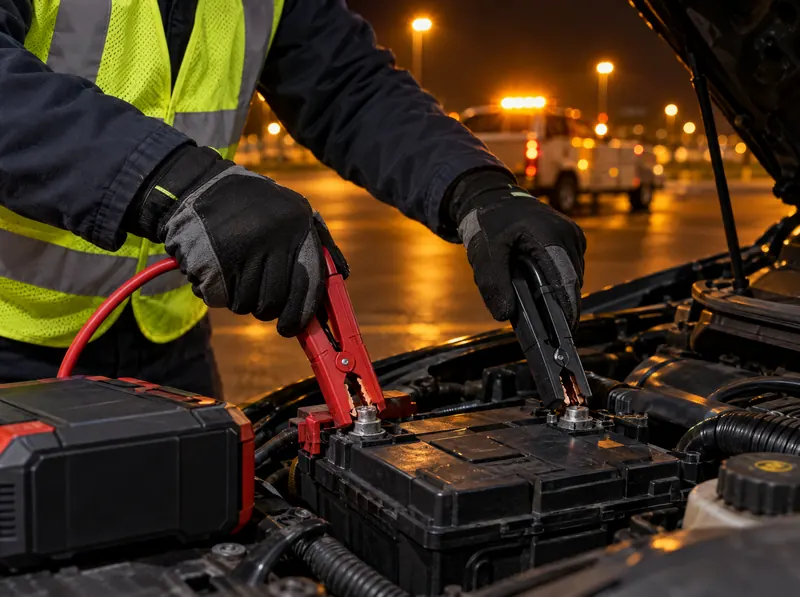
Your car sat under a shell of ice all night in a Brookside driveway. You chip the door open, turn the key and hear a click. Cold is hard on a weak battery, and that click often means it needs a jump start.
Before anyone comes, clear the ice off the hood if you can, so your driver can open it. If the jump doesn't take, the car needs a tow to a shop. Tell dispatch if the car sits on a sloped side street with no salt.
What should be in the car before the ice hits?
Pack these from ODOT's winter kit list:
- Jumper cables
- Clay-based cat litter or sand, for grip under a spinning tire
- A shovel, blankets, gloves and warm clothes
- A flashlight with extra batteries
- A bright fabric tie for the antenna
- Flares or triangles to warn other drivers
ODOT also says to keep your tank at least half full. Before you leave, check road conditions at okroads.org or call 1-844-4OK-HWYS. ODOT updates that line during bad weather. Its Drive Oklahoma app puts the same tools on your phone.
If you do drive, stay at least 200 feet behind ODOT's plows and 150 feet behind the city's trucks, and don't pass them. ODOT also says to wait for crews to clear bridges and overpasses before you cross. The city's first tip is the simplest: stay home if you can.
How does Sentinel help when Tulsa ices over?
Sentinel Towing is a towing and roadside network. We don't own wreckers or run a Tulsa office. A vetted local partner tow company does the job. Tell us if the car is on a bridge or a side street, and if any limbs or lines are close. We lock your price by text before dispatch. If the job changes, you get a new price by text first. On the worst ice days, a partner may not be able to reach you safely, and we'll say so before you agree to anything. Once help is booked, we stay with you by text until it arrives. You get your driver's name, photo and truck, so you can track your truck from your warm car. Read the Stay-With-You Promise, or see our Tulsa towing page for the rest of the metro.
Stuck right now? Call 1-888-TOW-1213, or request help online.
Tulsa Ice Storm Questions
Will the city salt my street during a Tulsa ice storm?
Probably not on a neighborhood street. The City of Tulsa treats main streets and streets near hospitals first. Highways and their ramps are ODOT's job.
Can I leave my stuck car on the street until the ice melts?
The city says stuck, abandoned cars will be reported and may be towed at the owner's expense. Call for a winch-out or a tow instead.
A power line came down on my car. What do I do?
Stay inside, call 911 and warn others not to touch the car. Leave only for a fire or another threat to your life. Then jump clear and hop away with both feet together.
How do I check if Tulsa's highways are icy before I leave?
Use ODOT's road conditions site, okroads.org, or call 1-844-4OK-HWYS. The Drive Oklahoma app has the same tools. A highway that looks wet can still be icy on the bridges and ramps.
Rules change, so check the official source before you rely on it. Sources: NWS Tulsa, December 2007 ice storm, NWS winter warnings, NWS winter driving safety, City of Tulsa Snow and Ice FAQ, City of Tulsa winter preparedness, ODOT hazardous driving tips, ODOT road conditions, 47 O.S. 11-314, Bernardo-Mills Law (OSCN).