How-to
What Helps If You Break Down Near the Old State Capitol in Springfield, Illinois
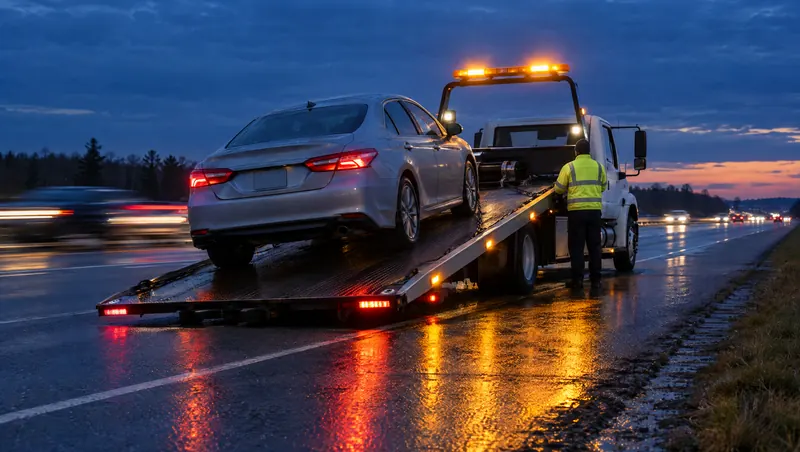
If your car dies near the Old State Capitol in downtown Springfield, Illinois, get it to a curb, not a crosswalk or the middle of a block. On a one-way street, Illinois lets you stop at the left curb or the right curb. Turn on your hazards. Note the street, the cross street and which way traffic flows. Then call for a jump, a tire change or a tow. Your price is locked by text before anyone is sent.
Where exactly is the Old State Capitol, and why is it a hard spot?
The state lists the site at Old State Capitol Plaza, at Sixth and Adams Streets. Visitors walk in from the east gate on Sixth Street or the south gate on Adams Plaza. So people on foot cross these streets all day.
The streets around it are part of the downtown grid. Fifth and Sixth carry most of the city's north and south traffic. Seventh adds more between North Grand and South Grand. Monroe, Adams, Washington and Cook are one way downtown too. Madison runs east and Jefferson runs west.
That mix is the problem. A stalled car on a one-way street has traffic stacking up behind it, with no lane coming the other way to swing into. Drivers get impatient. People step off the curb with their eyes on the old statehouse, not on your car.
There's one more surprise. The state's page for the site says the garage under the Old State Capitol is monthly parking only, with no public access. If your car is sputtering, don't aim for that ramp. Aim for a curb or an open lot.
Can you stop on the left side of a one-way street in Illinois?
Yes. Illinois law lets a car on a one-way street stop at either curb. You have to face the way traffic flows and keep your wheels within 12 inches of the curb. A local ordinance can change that, so watch for signs.
This matters downtown. Say your engine quits while you're in the left lane on Sixth. You don't have to cut across every lane to reach the right side. If the left curb is open and legal, coast there.
What if you can't reach any curb at all? The same part of the law says the stopping rules don't apply when a car is so disabled that stopping where it is can't be avoided. That's not a free pass to leave it there. It means you won't be breaking the rule just because the car died. Get help moving it as soon as you can.
Which spots should you keep your car out of?
If your car still rolls, even slowly, use that to get clear of these places. Illinois law bans stopping or standing in them, except when the car truly can't move:
- Inside an intersection. Downtown, that blocks two one-way streets at once.
- On a crosswalk. Around the Capitol plaza, people cross all the time.
- Next to a parked car. That's double parking, and it shuts a lane.
- Within 20 feet of a crosswalk at an intersection. Stop mid-block if you can.
- Within 30 feet of a stop sign or traffic signal. Cars behind you need room to see it.
- Within 15 feet of a fire hydrant, or in front of a driveway.
- Anywhere signs say no stopping.
Why care, if the car is broken? Because a car in one of these spots is in the way of people, buses and fire trucks. It can also be towed by the city. If that happens, our guide to finding a towed car in Springfield walks you through the release.
What if you stall near railroad tracks downtown?
The National Park Service warns visitors that downtown Springfield has several railroad crossings mixed in with its one-way streets. A city rail project is moving passenger and freight trains from the Third Street corridor to Tenth Street. Either way, tracks cross downtown streets.
Illinois law says no stopping on railroad tracks, and no parking within 50 feet of the nearest rail. If your car dies on the tracks, don't try to fix it there. Get everyone out. Walk away from the tracks, then call 911. If you can coast clear before the car stops, keep rolling well past the crossing.
What should you do in the first few moments?
- Hazards on. Do it before anything else, so the cars behind you know.
- Steer for a legal curb. Left or right on a one-way. Mid-block is best.
- Stay buckled if you're in traffic. If you're at the curb and it's safe, you can get out on the sidewalk side.
- Read the street signs. Get your street, the nearest cross street and the direction traffic moves.
- Call 911 first if anyone is hurt or if you're stuck in a live lane you can't leave.
The direction of traffic is the detail people forget. Your driver needs it. On a one-way, it tells them which way to come in and which curb you're on. "Adams, near Sixth, facing the same way as traffic, left curb" is a great description.
Which kind of help do you need?
A lot of downtown breakdowns don't need a tow at all. Match what you see to the right job:
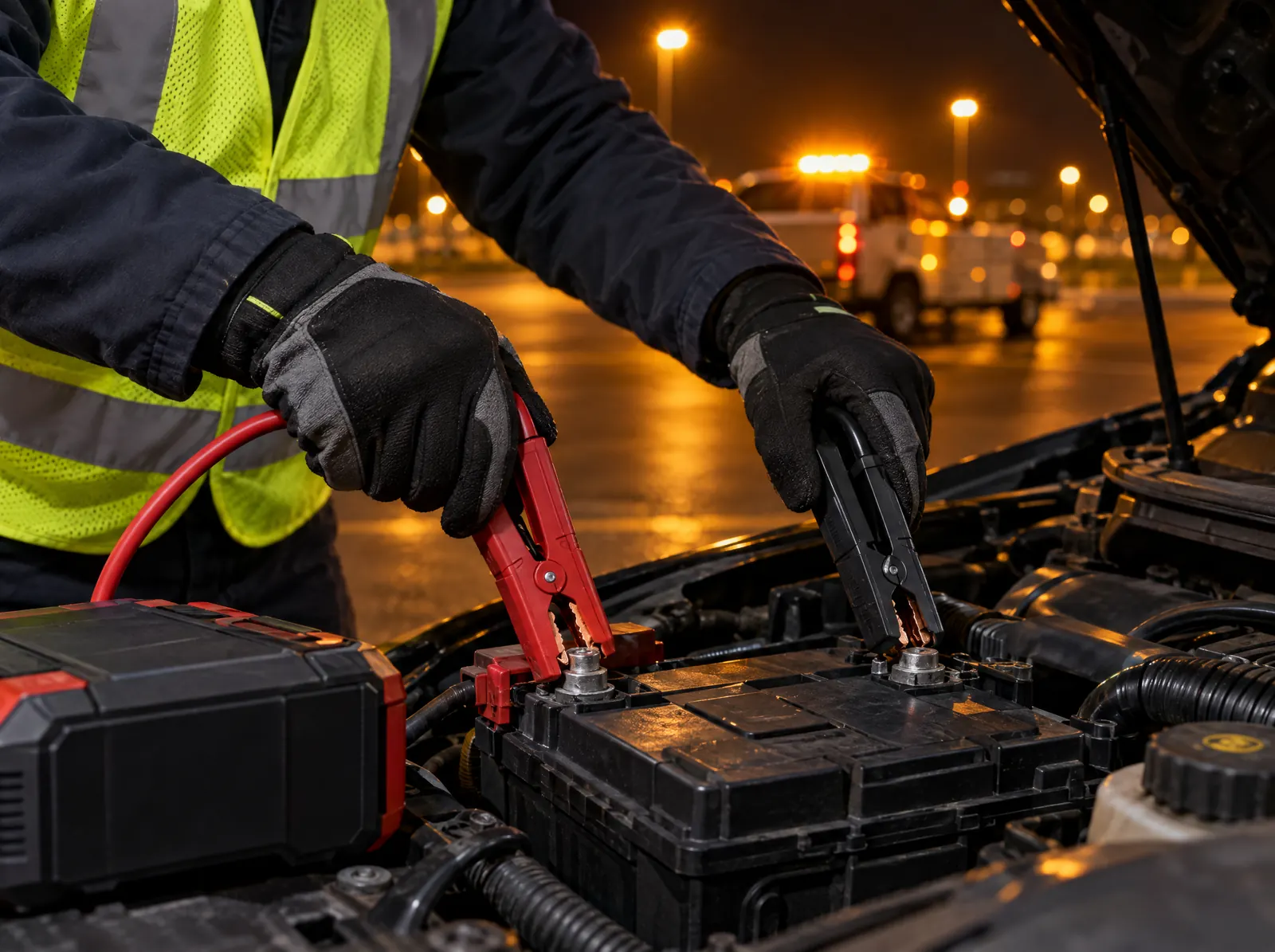
- Clicks, dim lights, or nothing when you turn the key. Try a jump start first. A car that sat all day in a downtown spot can drain a weak battery.
- A flat after a curb or a pothole. A flat tire change puts your spare on, right there at the curb.
- Keys locked inside after lunch. That's a car lockout. No tow needed.
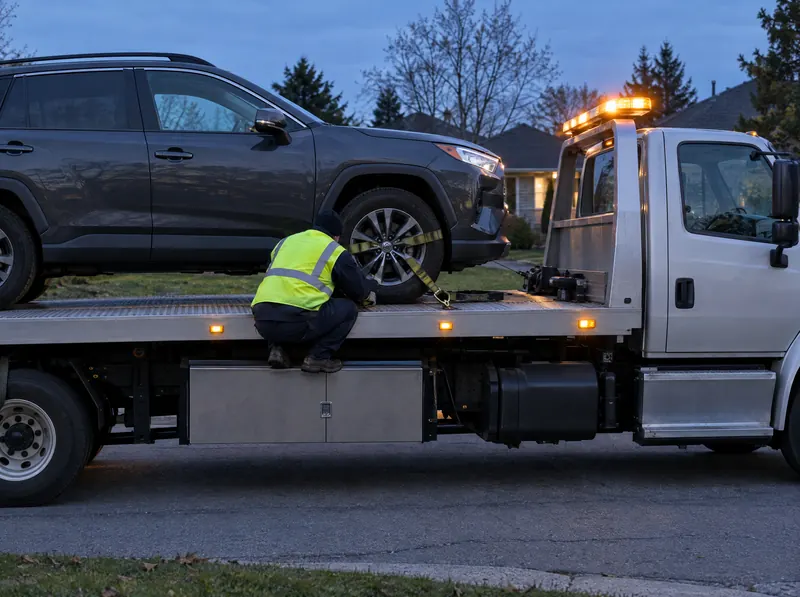
- Smoke, grinding, a warning light, or it won't run after a jump. You likely need car towing to a shop or to home.
Not sure? Describe what happened on the call. The job sets the price, so getting it right first saves a second trip.
Will you get a ticket while you wait?
Parking near the Old State Capitol is enforced on weekdays, the state's visitor page says, even though you don't feed the meters. The Park Service says on-street parking downtown is free on weekends. A legal curb spot is still the safest place to wait.
If an officer stops to check on you, tell them help is on the way. Show them the text with your driver's details. That's simple proof your car will be moved.
How does Sentinel help on a Springfield street?
Sentinel Towing is a towing and roadside network. A vetted local partner tow company does the job. We lock your price by text before anyone is sent. Then you get your driver's name, photo and truck by text, and you can track your truck on a map. Under the Stay-With-You Promise, we check on you by text until the truck pulls up.
If you break down outside downtown, out on the parkways or near Lake Springfield, see our Springfield, Illinois towing page for those roads.
Stuck right now? Call 1-888-TOW-1213, or request help online.
Old State Capitol Breakdown Questions
My car died in the left lane of a one-way downtown. Can I leave it at the left curb?
Yes, if the curb is legal there. Illinois lets you stop at either curb on a one-way street. Face the way traffic flows and keep your wheels close to the curb. Watch for no stopping signs.
Can I pull into the garage under the Old State Capitol?
Plan on no. The state's page for the site says that garage is monthly parking only, with no public access. Head for a legal curb or an open lot instead.
What do I tell the driver so they can find me downtown?
Give the street, the nearest cross street and the way traffic moves. Say which curb you're on. A landmark like the Old State Capitol plaza helps too.
Do you tow cars the city has impounded?
No. Sentinel doesn't do impounds or tows from private lots. If the city towed your car, call the Springfield Police Department to find it. Our impound guide has the steps.
Rules change, so check the official source before you rely on it. Sources: Old State Capitol visitor page (Illinois), Illinois Vehicle Code 11-1303 and 11-1304, Illinois Vehicle Code 11-1301, Lincoln Home traffic tips (NPS), Springfield Rail Improvements Project.