How-to
What to Do First When Summer Heat Hits Your Car in Bakersfield
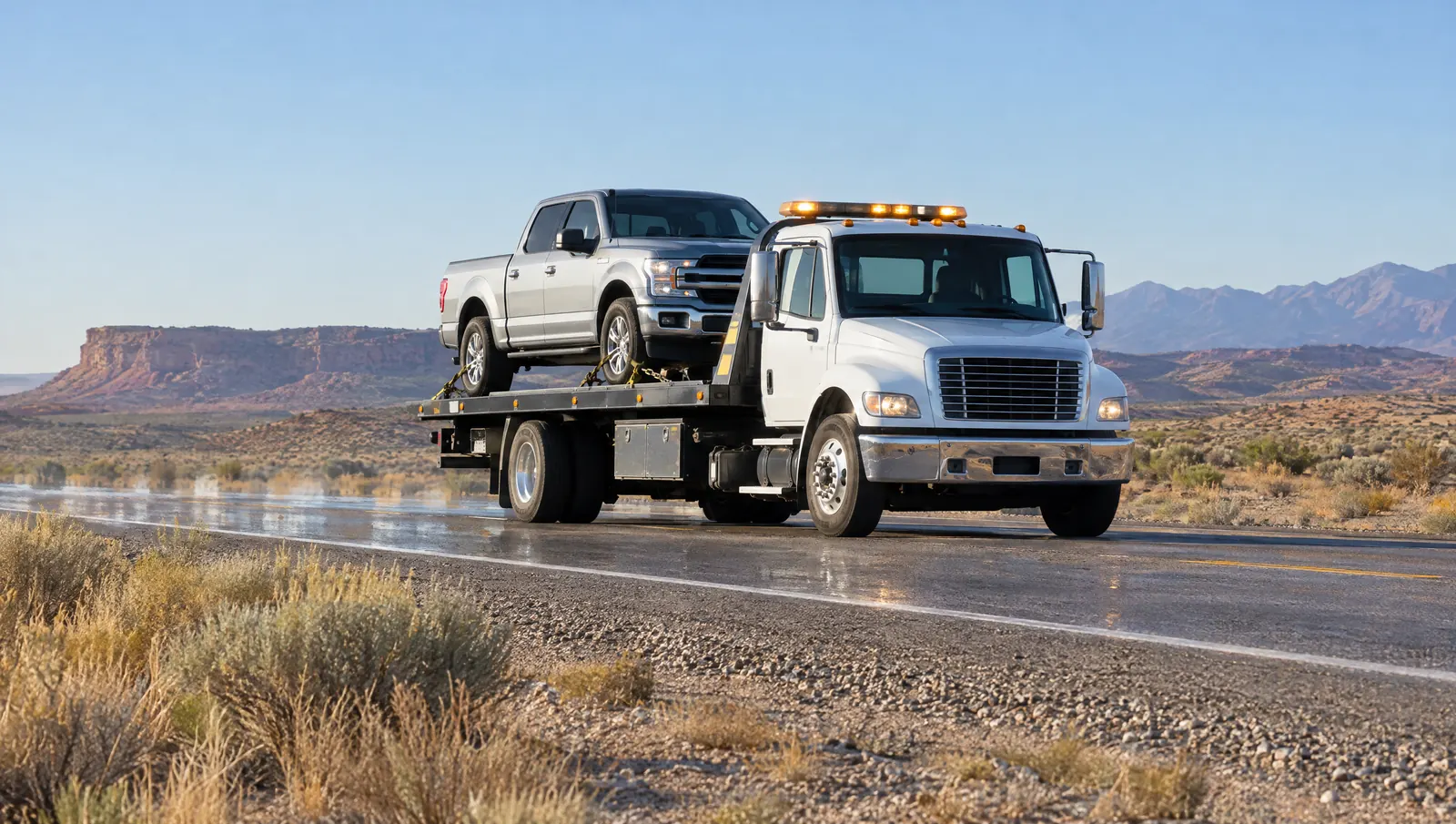
When heat hits your car in Bakersfield, get off the road before the part fails, not after. If a tire thumps or the temperature gauge climbs on SR 99, put your hazards on, ease off the gas and steer to the right shoulder or the next exit. Shut the engine off if it's running hot. Then protect yourself from the heat while you call for roadside help.
How hot does a Bakersfield summer really get?
Hotter than most people plan for. NOAA's 1991 to 2020 normals for the Bakersfield airport put the average July high at about 98°F. June averages about 92, August about 97 and September about 91. In a normal year, the city sees about 100 days at 90 or hotter, and about 24 days at 100 or more.
The nights don't help much. The normal July low is about 71°F. So your car never really cools off between drives. The pavement on SR 99 holds that heat, and your tires roll on it all afternoon.
That's why summer breakdowns here feel sudden. A tire with a slow leak runs hot for weeks, then gives out on the drive home. A cooling system with a weak hose holds up in May, then quits in a July traffic jam near the SR 58 interchange.
What are the warning signs before something fails?
Most heat failures give you a short warning. Catch it and you can choose where you stop.
- The temperature gauge climbs past its normal spot, or a red engine light comes on.
- Steam or a sweet smell comes from under the hood. That's often coolant.
- The car pulls to one side, or you feel a new thump or wobble through the steering wheel.
- The tire pressure light comes on in the middle of a drive.
- The engine cranks slowly after the car sat in a hot lot, like a store lot off Rosedale Highway.
Any one of these is your cue to start looking for a safe place to stop. Don't wait to see if it goes away.
How do I pull off SR 99 safely when something feels wrong?
SR 99 runs straight through the middle of Bakersfield, with traffic on both sides of you. Here's the order that keeps you out of trouble:
- Turn your hazards on first. It tells the drivers behind you something is wrong.
- Ease off the gas. If a tire blows, hold the wheel straight and let the car slow down. Don't slam the brakes.
- Take the next exit if the car can make it. A side street or a parking lot is a far better place to wait than a freeway shoulder.
- If it can't, use the right shoulder. Pull as far right as you can. Avoid the left shoulder unless you have no other choice.
- Turn the engine off if it's overheating. Leave the hazards on.
California's Vehicle Code 21718 says you can't stop on a freeway like SR 99 except in certain cases. One of them is a car so disabled it can't avoid stopping while help is on the way. So once you're on the shoulder, call for help right away.
Your hazards also do legal work for you. Under Vehicle Code 21809, drivers coming up on a stopped car with flashing hazards must move over a lane when it's safe, or slow down.
What about SR 58 and SR 178?
The same steps apply. On SR 58 heading east, the climb toward the Tehachapi Mountains puts extra strain on a hot engine. Watch your gauge on the grade. SR 178 has no direct freeway link to SR 99. If you stop there, note the surface street you used to get on.
Should I wait in the car or outside in triple-digit heat?
It depends on where you stopped. On a freeway shoulder, stay buckled in the car if you can't get well away from traffic. In a parking lot or on a quiet side street, you have more choices.
- If the engine is fine and you're parked safely off the road, you can run the AC while you wait.
- If the engine overheated, leave it off. Crack the windows and find shade if there's a safe spot away from traffic.
- Drink water in small sips. Keep a few bottles in the car from May to September.
- Don't stand behind your car or between it and traffic. Stand well off the road if you get out.
Know the signs of heat illness
The National Weather Service lists the signs of heat exhaustion: heavy sweating, weakness, cool and clammy skin, dizziness, nausea, headache or fainting. Get to a cooler spot, use cool wet cloths and sip water.
Heat stroke is worse. Signs include hot red skin, little or no sweat, confusion or a throbbing headache. The Weather Service says to call 911 right away. It's a medical emergency, and the person should not be given fluids.
What if a child or pet is in the car?
Never leave a child or a pet in a parked car in Bakersfield heat, even for a quick run inside. The CHP warns that with a window down two inches and the air outside in the low 80s, the inside of a car can reach deadly levels after only 10 minutes. Here, a normal July afternoon runs close to 98. A young child's body heats three to five times as fast as an adult's.
California law backs this up. Vehicle Code 15620 says a child 6 or younger can't be left in a car without someone 12 or older watching when conditions put the child at real risk, or when the engine is running or the keys are in it.
If you lock your keys in the car and a child or pet is inside, call 911 first. Don't wait for a lockout service. For a lockout with no one inside, a car lockout visit gets you back in.
What help actually fixes a heat breakdown?
Not every summer problem needs a tow. Tell the dispatcher what you saw and heard, and you'll get the right job.
| What happened | What to ask for |
|---|---|
| Tire went flat, and your spare is in good shape | A flat tire change, your spare put on |
| Car won't start after sitting in a hot lot | A jump start |
| Engine overheated, steamed or won't stay running | A car tow to your shop |
| Tire shredded and the spare is flat or missing | A tow to a tire shop |
| Keys locked inside, nobody in the car | A car lockout visit |
An overheated engine is one to tow, not drive. Driving it hot can turn a cheap hose into a ruined engine. Don't open the radiator cap while it's hot, either.
How does Sentinel help when you're stuck in the heat?
Sentinel Towing is a towing and roadside network, not a tow company. A vetted local partner tow company does the job. You tell us where you are, and we text you a price before anyone is sent. That price is locked. Then we check on you by text until the truck arrives, as part of our Stay-With-You Promise. You can track your truck on a map, so you know when it's safe to step out of the AC.
For more on the roads and neighborhoods around town, see our Bakersfield towing page.
How do I get my car ready before the next heat wave?
- Check tire pressure in the morning, before you drive, using the number on the sticker inside the driver's door.
- Look at your spare too. A flat spare doesn't help on SR 99.
- Have a shop look at old hoses, the coolant and a battery that's a few years old.
- Keep water, a phone charger and sun shades in the car.
- Check Caltrans QuickMap before long drives on SR 58 or SR 99.
If anyone is hurt, sick from the heat or stuck in a live lane, call 911 first.
Stuck right now? Call 1-888-TOW-1213, or request help online.
Bakersfield Summer Breakdown Questions
My car is overheating on SR 99. Can I make it home?
Don't try. Exit if you can, or pull onto the right shoulder, and shut the engine off. A hot engine can wreck itself fast. Ask for a tow instead.
Is it safe to sit in my car with the AC on while I wait?
If the engine is healthy and you're parked off the road, yes. If it overheated, leave it off. On a freeway shoulder, stay buckled in unless you can get well away from traffic.
Can you put my spare on if a tire blows in the heat?
Yes, if your spare is in good shape. A partner puts it on so you can drive to a tire shop. If the spare is flat or missing, ask for a tow.
My keys are locked in the car with my dog inside. What do I do?
Call 911 first. The National Weather Service warns that cracked windows give pets little relief. Don't wait on a lockout service when an animal or child is trapped in summer heat.
Rules change, so check the official source before you rely on it. Sources: NOAA monthly normals, Bakersfield airport, NOAA annual normals, Bakersfield airport, CHP summer heat safety tips, NWS heat illness, NWS heat safety, NWS heat and vehicles, California Vehicle Code 21718, California Vehicle Code 21809, California Vehicle Code 15620, Caltrans QuickMap.