Costs
Tow Costs in New Orleans: What a Flooded Street Adds to the Job
In New Orleans, where your car is stuck can matter more than how far it goes. A car on a dry lot with a dead battery may only need a jump. A car that stalled in street water can't be started or driven, so it has to be loaded and hauled to a shop. One stuck on soft ground may need a pull first. Distance, your vehicle and who called the truck count too.
Why is a tow from a flooded street a different job?
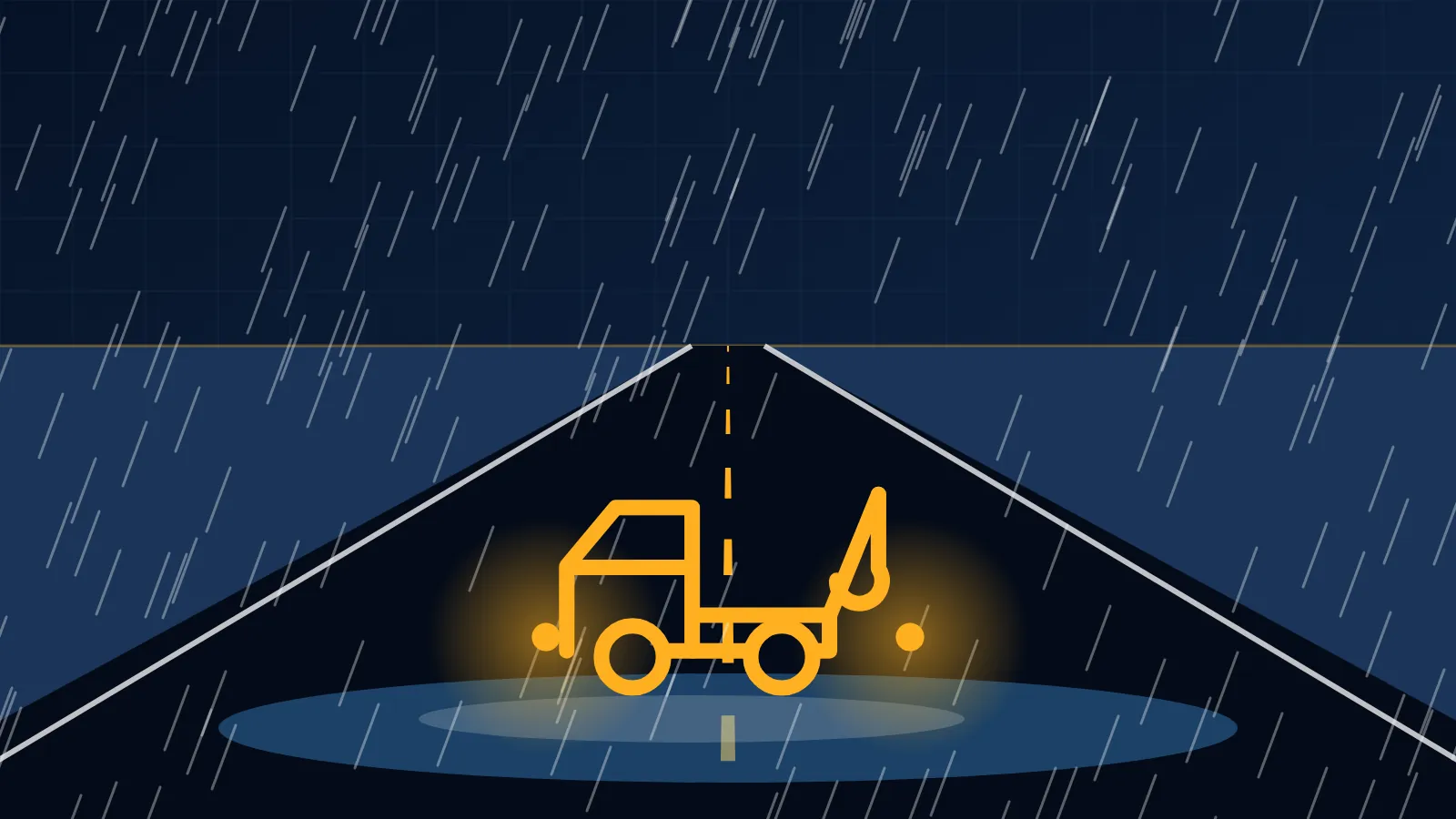
New Orleans gets a lot of rain. NOAA's normals for the airport station show about 62 inches a year. On about 20 days a year, an inch or more falls. A hard storm can put water in the street before you finish your errand.
When your car sits in that water, the job changes before anyone counts miles. Here's how:
- No jump, no "try it once." A car that sat in water shouldn't be cranked. Water in the engine can turn a small problem into a big one. Your driver won't start it to drive it onto the truck.
- It has to be pulled or loaded. A car that won't roll or steer takes more work to hook up than one you can steer.
- The truck waits for the water. Nobody can hook up a car standing in moving water. The job starts when the street drains.
- It needs a shop, not your driveway. A flooded car should be looked at before it runs again. That usually means a tow straight to a mechanic.
So the same short trip can be a quick job on a dry day and a bigger one after a storm.
When is it safe to call a tow during street flooding?
Not while the water is rising. The city's emergency site, NOLA Ready, says a car will float in less than two feet of moving water. The National Weather Service puts it lower: 12 inches of rushing water can carry away most cars. Two feet can carry away SUVs and trucks.
If water rises around your car, NOLA Ready says to leave the car right away. Get to higher ground. Call 911 to report street flooding and any life-threatening emergency. Sentinel is not an emergency service, and no tow truck should drive into that water to reach you.
Once the rain stops, check the city's Streetwise map. It shows reported street flooding. When your block is clear, call for the tow. Even then, watch your step. The city warns that floodwater can wear away roads, and standing water may carry current from downed power lines.
What should I tell the dispatcher about the water?
Your price is set from what you tell us, so be specific. These answers shape the job:
- How high the water got. Did it reach the tires, the door sills or the seats? Look for a water line or wet carpet.
- Whether you tried to start it. Say so if you did, and what happened.
- If the car rolls. Can it shift into neutral? Do the wheels turn?
- Where it sits now. In the street, on a driveway, or up on soft ground.
- Where it should go. Pick a shop that can take a flood car. Call ahead if you can.
Then take photos of the car and the water line for your own records. Louisiana's Department of Insurance says auto policies cover flooding only if your policy includes "Other Than Collision" coverage. Liability alone won't cover it. Call your agent before you approve big repairs.
What else changes the price of a tow in New Orleans?
Water is the local twist. The usual things still apply.
- The pickup spot. A side street in Mid-City is simple. A stall on the raised stretch of I-10 above Claiborne Avenue, or on the High Rise over the Industrial Canal, takes more care.
- The drop-off spot. A shop in your neighborhood is short. A shop across the river, over the Crescent City Connection on the Westbank, is a longer haul.
- The vehicle. A small sedan is an easy load. A lifted pickup or an all-wheel-drive SUV may need a flatbed.
- What went wrong. A dead battery, a flat or an empty tank may not need a tow at all.
- How it's stuck. A car that slid off the pavement into soft mud may need a winch-out before it can be towed.
I moved my car to the neutral ground. Now it won't start. What now?
During major street flooding, the city may lift parking rules on neutral grounds and sidewalks. That lets you move a car to higher ground. NOLA Ready asks you not to block intersections or streetcar tracks. Don't park on tree roots or under branches. Drive slowly so you don't tear up the ground.
Here's the catch. The city says parking rules come back two hours after the flooding ends, unless it says otherwise. If your car won't start up there, don't wait. Call early so the car can go to a shop before the rules return.
If the wheels sank into wet grass, say so on the call. A short pull back to the pavement may come first.
What if I run out of gas on the Pontchartrain Expressway?
Then you may not need a tow. Fuel delivery brings enough gas to reach the nearest station. That's a smaller job than hauling the car.
Gas matters more here in storm season. The Atlantic hurricane season runs June 1 to November 30. Louisiana's state preparedness guide says to keep a full tank if an evacuation seems likely. Stations may be closed, and pumps may not work in a power outage.
If the car dies in a travel lane, Louisiana law says the driver must move it as soon as possible and protect traffic until then. Turn on your hazards. On the raised interstate, stay in the car with your belt on. If you're stuck in a live lane or anyone is hurt, call 911 first.
Is a tow from a private lot priced the same way?
No. When a property owner has your car towed, that's a nonconsensual tow. Louisiana law says those fees must be uniform, set by Louisiana Public Service Commission rules. If a company charges more, the owner can sue to get back the extra, plus storage, lawyer fees and court costs. Lots that tow must post approved State Police signs at their entrances and exits.
Sentinel doesn't do impounds or private-property tows. If the city towed your car, call (504) 658-8100 to confirm it. Our New Orleans impound lot guide walks through getting it back. If it won't start once released, a tow from the lot to a shop is something we can help with.
How does Sentinel set your price?
Sentinel Towing is a towing and roadside network. A vetted local partner tow company does the job. You tell us where the car is, what you drive, what happened and where it should go. We text you a price before anyone is sent. That price is the most you pay for the job. If the job changes, we text a new price first and you decide. Then we stay with you by text until help arrives. That's our Stay-With-You Promise.
For bridges, exits and neighborhoods, see the New Orleans towing page. For a standard haul to a shop, read about car towing.
Stuck right now? Call 1-888-TOW-1213, or request help online.
New Orleans Tow Price Questions
Does a flooded car cost more to tow in New Orleans?
It's often a bigger job. A car that sat in water shouldn't be started, so it has to be pulled or loaded and taken to a shop. Tell us how high the water got so your price fits the real job.
Can you tow my car while the street is still flooded?
No. Nobody should drive into rising water. If water rises around your car, leave it and call 911. Call us once the street drains.
My car is on the neutral ground and won't start. How long do I have?
The city says parking rules come back two hours after flooding ends, unless it says otherwise. Call early so the car can be moved to a shop in time.
Does my insurance pay for a flooded car in Louisiana?
The Louisiana Department of Insurance says only if your policy includes "Other Than Collision" coverage. Liability alone doesn't cover flooding. Ask your agent before repairs start.
Rules change, so check the official source before you rely on it. Sources: NOLA Ready: flooding, NOLA Ready: flood hazard, Streetwise, National Weather Service: Turn Around Don't Drown, NOAA climate normals, National Hurricane Center, Louisiana hurricane preparedness guide, Louisiana Department of Insurance, Act 440 of 2026 (R.S. 32:1736), R.S. 32:141, City of New Orleans: find my towed vehicle.