Costs
Tow Costs in Lansing: What the I-496 Corridor Adds to the Price
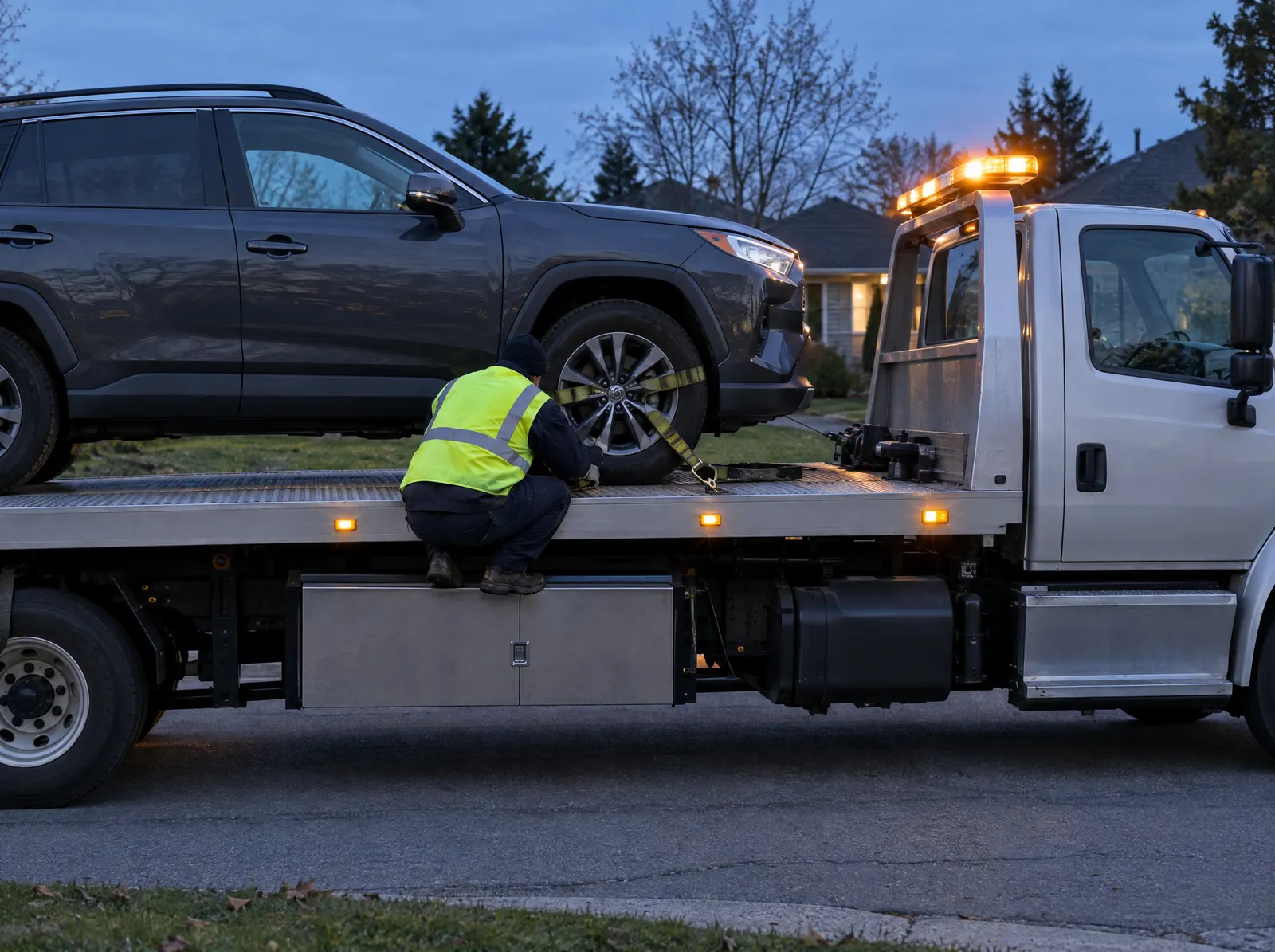
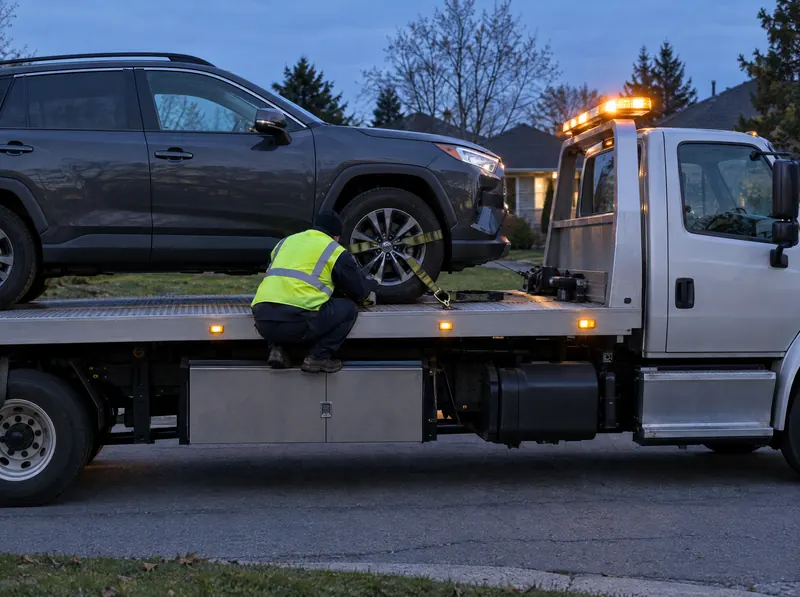
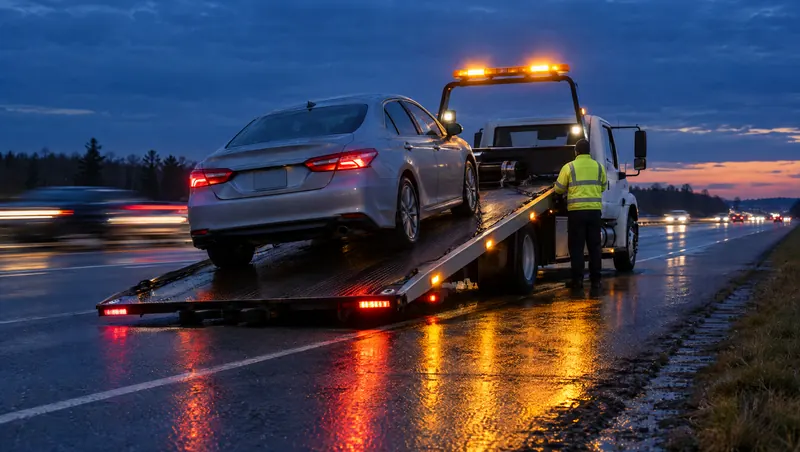
In Lansing, the spot where your car quits on I-496 often shapes a tow price more than the make of the car. A stall on the shoulder takes more setup than one on a service drive. A car near REO Town and downtown is close to most of the city. One out past Creyts Road in Delta Township has farther to go. Distance to your shop, your vehicle and what went wrong count too.
Why does the spot on I-496 matter so much?
I-496 runs right through the middle of Lansing. It starts at I-96 and I-69 in Delta Township, west of the city. It crosses into Lansing at Waverly Road. Then it cuts past downtown, crosses the Grand River and swings south through East Lansing. It ends back at I-96 in Delhi Township.
So one freeway touches the west suburbs, downtown, the Michigan State campus and the south edge of town. A breakdown on it can be close to your shop, or on the far side of the city from it. That gap is the single biggest local factor in a tow price here.
Think of two cars. One dies eastbound near the Pine and Walnut exits downtown. Your shop is on the Eastside, off Michigan Avenue. That's a short trip across town. The other dies westbound out past Creyts Road. It's going to the same shop. Now the truck has to come out, hook up, turn around and drive back across the whole corridor.
Is a breakdown on the shoulder a bigger job than on a service drive?
Often, yes. Near Lansing Road, I-496 picks up two service drives. St. Joseph Street runs one way, westbound, on the north side. Malcolm X Street runs eastbound on the south side. MDOT has used both streets to carry freeway traffic during rebuilds.
Those service drives are city streets. A car stopped there is easier to reach and load. On the freeway shoulder, it's a different job:
- Traffic is fast and close. Your driver needs room to park the truck and work beside live lanes.
- The truck has to come from the right direction. On a divided freeway, it can't just cross over to you.
- Ramps make it tricky. Around Cedar Street and Pennsylvania Avenue, eastbound exits sit on side roads called collector-distributor roads. Say if you're on one of those and not the main freeway.
Michigan law treats the shoulder of a freeway as a place for emergencies only. MCL 257.672 says you can't stop or leave a car on any part of a limited access highway, paved or not, except in an emergency or mechanical trouble. A breakdown counts. It just isn't a place to wait any longer than you have to.
Should I try to coast off to the service drive?
Only if the car still drives safely. If it steers, brakes and moves at a safe speed, take the next exit. A car parked on St. Joseph or Malcolm X is a simpler pickup than one on the shoulder. If it won't move, don't push it. Stay put, hazards on.
Does it matter which way I was heading?
Yes, more than people think. Some downtown ramps only work one way. Lansing Road and Grand Avenue each have a westbound exit and an eastbound entrance, and nothing else. The service drives are one way, too.
So "I'm on 496 by downtown" leaves your driver guessing. Give these four things on the call:
- Your direction: eastbound or westbound. On the stretch past MSU, say northbound or southbound.
- The last exit you passed: Creyts, Waverly, Lansing Road, MLK, Pine and Walnut, Grand Avenue, Cedar, Pennsylvania, Trowbridge or Jolly.
- Where the car sits: right shoulder, left shoulder, a ramp or a service drive.
- River side: east or west of the Grand River crossing, if you're near downtown.
A clear answer helps the right truck come the right way. That keeps the job, and the price, matched to what's really there.
What about the stretch shared with US 127?
In East Lansing, I-496 turns south and joins US 127. The two run as one road along the west side of the MSU campus. Then they cross back into Lansing at Jolly Road and split at I-96.
Signs on this stretch show both numbers. Callers often say one and mean the other. Tell us you're on the shared part, and give Trowbridge Road or Jolly Road as your mark. If you ran out of gas here, you may not need a tow at all. Fuel delivery brings enough to reach a station. Before you head out, check MDOT's Mi Drive map for lane closures on either road.
What else changes the price of a Lansing tow?
The corridor is the local twist. The usual factors still apply.
- Where it's going. Your own shop, a dealer or your driveway. Pick it before you call so the price fits the trip.
- Your vehicle. A small car is an easy load. An all-wheel-drive SUV or a light pickup may need a flatbed.
- What went wrong. A dead battery may only need a jump start. A flat may only need your spare put on. Neither needs a full tow.
- How it's stuck. A car that slid into a snowbank off the ramp may need a short pull before it can roll.
Does winter make Lansing tows harder?
It can. NOAA's normals for the Lansing airport show about 143 nights a year at 32 degrees or colder. About 8 nights drop to zero or below. The city gets about 50 inches of snow a year. Cold nights kill weak batteries. Snow hides the edge of the shoulder. Tell us if your car is in snow or ice, so the price covers it.
What happens if I leave my car on I-496 and come back later?
This is the costly path, and it's easy to fall into. You get a ride home and plan to deal with it tomorrow.
Michigan law sets a short clock. Under MCL 257.252a, a car with a valid plate that stays on a state trunk line highway for 18 hours counts as abandoned. I-496 is a state highway run by MDOT. On other public property, the clock is 48 hours. Once a car counts as abandoned, police can have it towed and stored.
It can happen sooner. MCL 257.252d lets police remove a car right away if it blocks traffic or creates a hazard. That tow is at the owner's expense. After that, you deal with the custodian and the storage, not with a shop.
Sentinel doesn't do impounds or police tows. If your car was already taken, call the police agency that covers that road to find out where it went. If it won't start once you get it back, a tow from the lot to a shop is something we can help with.
How do I stay safe while I wait?
If anyone is hurt, or your car is stuck in a live lane, call 911 first. Sentinel is not an emergency service.
Otherwise, stay in the car with your belt on and your hazards going. Michigan's move-over law, MCL 257.653a, tells passing drivers to slow to at least 10 mph under the limit for stopped emergency vehicles with flashing lights. Where there are two or more lanes their way, they must also move over a lane, or two vehicle widths. A tow truck with flashing red or amber lights counts. Your car with flashers on isn't named in that law. So get as far onto the shoulder as you can.
How does Sentinel set your price?
Sentinel Towing is a towing and roadside network. A vetted local partner tow company does the work. You tell us where the car is, which way you were going, what you drive and where it should go. We text you a price before anyone is sent. That price is the most you pay for the job. If the job changes, we text a new price first, and you decide. Then we stay with you by text until help arrives. That's our Stay-With-You Promise.
For neighborhoods, winter tips and the roads around town, see the Lansing towing page. For a standard haul to a shop, read about car towing.
Stuck right now? Call 1-888-TOW-1213, or request help online.
Lansing Tow Price Questions
Is a tow on I-496 priced higher than one on a Lansing side street?
It can be a bigger job. On the freeway shoulder, your driver works beside fast traffic and has to reach you from the right direction. A car on a service drive or a side street is simpler to load. Tell us exactly where you are so the price fits.
Does the shop I pick change my tow price?
Yes. Distance from your car to the shop is one of the biggest factors. Pick the shop before you call. A shop across town from your breakdown means a longer trip than one nearby.
How long can I leave my car on I-496 in Michigan?
Not long. Under MCL 257.252a, a plated car left on a state trunk line highway for 18 hours counts as abandoned, and police can have it towed. If it blocks traffic, police can remove it right away. Call for a tow before you leave it.
Will my price go up after the truck arrives?
Not without your OK. Your price is locked by text before dispatch. If the job turns out different, we text a new price first, and you decide.
Rules change, so check the official source before you rely on it. Sources: MCL 257.672, MCL 257.252a, MCL 257.252d, MCL 257.653a, MDOT: I-496 rebuild (2022), MDOT: I-496 update (2020), MDOT Mi Drive, NOAA climate normals.