Safety
Cold Snap Breakdowns on the QEII Near Red Deer: Why You Call Early
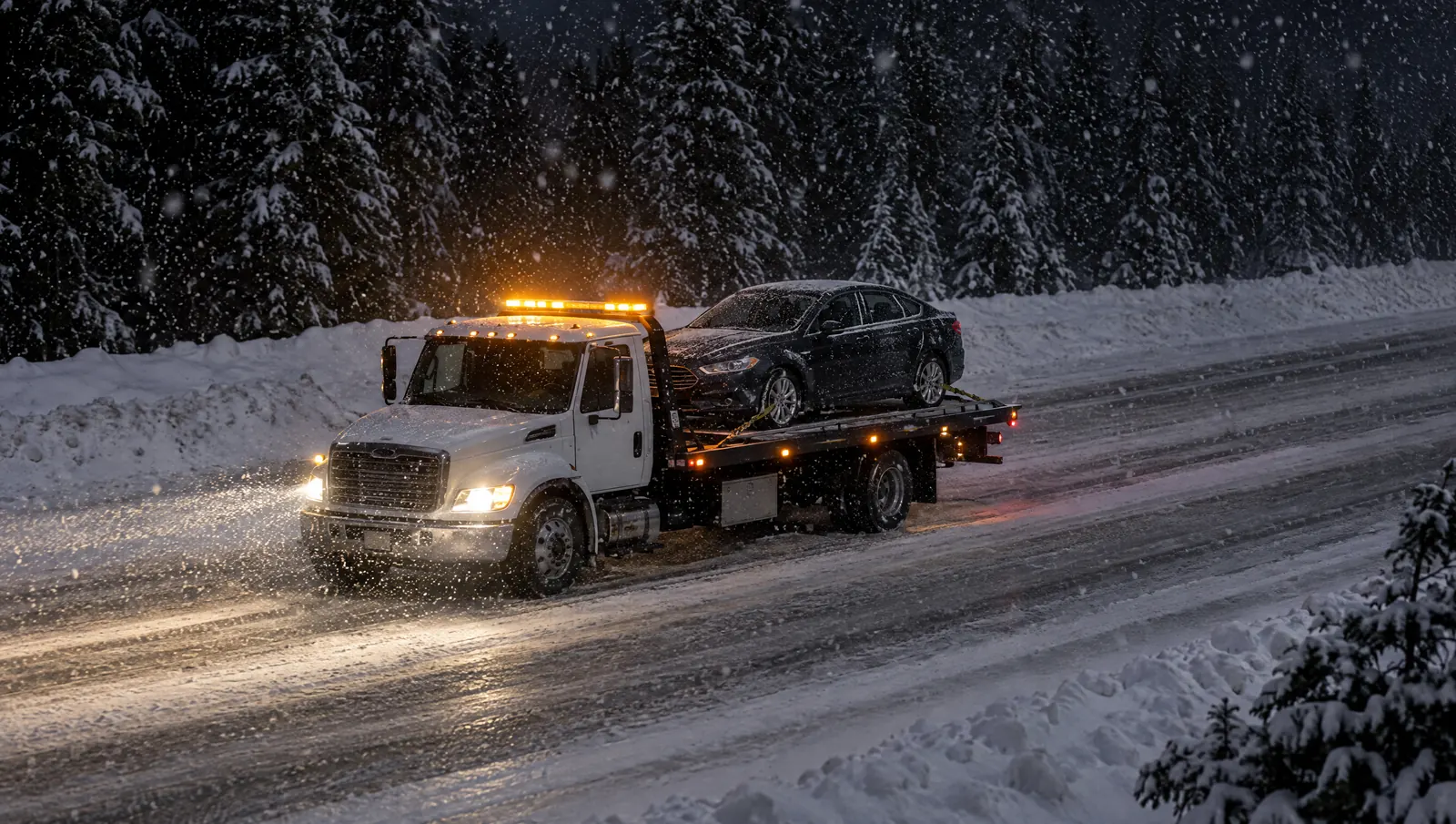
In a Red Deer cold snap, call for roadside help as soon as your car quits. Don't wait to see if it restarts. When the wind chill drops below -28, Environment Canada says bare skin can freeze in well under an hour. Pull fully onto the QEII shoulder, hazards on, and stay inside. Call 911 first if anyone is hurt or your car blocks a lane. Then call for help and keep warm without letting fumes build up.
How cold does a Red Deer cold snap get?
Colder than most people plan for. Environment Canada keeps long-term records at the Red Deer airport. Here's what a normal year looks like there.
- About 61 days with a wind chill below -20.
- About 23 days with a wind chill below -30.
- About 6 days with a wind chill below -40. January brings the most.
- About 8 nights a year fall below -30 on the thermometer itself.
Those deep-cold nights don't stick to January. The records show them in November and March too. So a cold snap can catch you on a drive you thought was safe, with summer tires still on or a half-empty tank.
Environment Canada doesn't issue wind chill warnings. It issues cold warnings, and wind chill is part of them. The trigger depends on where you live, since "extreme" means colder than usual for your area. Wind chill shows up in the forecast once it's zero or colder and the wind hits 5 km/h.
Why should you call right away instead of waiting?
Because the cold works on you faster than you think. A stalled engine means no heater. Your car slowly turns into a cold metal box. Here's how Environment Canada rates the risk.
| Wind chill | Risk | Bare skin can freeze in |
|---|---|---|
| -10 to -27 | Moderate | Long periods outside without protection |
| -28 to -39 | High | 10 to 30 minutes |
| -40 to -47 | Very high | 5 to 10 minutes |
| -48 to -54 | Severe | 2 to 5 minutes |
Now think about what toughing it out looks like. You try the key again. You wait. You call a friend who doesn't answer. You get out to look under the hood in a north wind. Each step eats time and body heat. Calling early costs you nothing. If the car fires up before your driver arrives, you can tell them.
When does a cold snap breakdown become a 911 call?
Call 911 if anyone is hurt, or your car is stuck in a driving lane. Also call 911 if someone shows these signs of serious cold, from Health Canada:
- Early stage: shivering, goose bumps, numb hands. Get warm now.
- Middle stage: strong shivering, slow moves, mild confusion. Call 911.
- Late stage: shivering stops. Trouble speaking, thinking or walking. Call 911.
When the shivering stops, it isn't good news. It means the body is losing the fight. Watch kids and older riders closely. Health Canada lists babies under 1, adults 65 and older, people with diabetes or blood vessel disease, and people taking beta-blockers as higher risk. For frostbite, watch for skin that turns yellowish or white but still feels soft.
How do you stay warm in the car without breathing fumes?
Alberta's emergency advice is simple: stay calm, stay inside and call for help. Your car is your shelter. Leaving it on foot in a cold snap is how a breakdown turns into a rescue.
- Run the engine now and then, not nonstop. Short bursts of heat stretch your fuel.
- Clear the tailpipe first. Snow piled around the exhaust can push fumes into the car. Check it before each run, and after the plow passes.
- Crack a window on the side away from the wind. Fresh air matters even when it feels wrong.
- Layer up. Health Canada says dress in layers with a wind-resistant top layer. Add a hat, gloves, warm socks and a scarf. Wool and synthetics hold heat better than cotton.
- Save your phone. Turn the screen down and keep the phone in an inside pocket. Cold drains batteries.
If the engine won't run at all, blankets and body heat are what you have. That's the strongest reason of all to call the moment the car dies.
What does the cold do to the QEII near Red Deer?
Deep cold changes the road, not just your car. Alberta's winter tips say bridge decks are often slicker than the rest of the highway. Their temperature swings more. Near Red Deer, that means the QEII crossing of the Red Deer River, near km 398. North of the city, the Blindman River crossing sits near km 408. Ease off before each bridge, even if the road before it felt fine.
Alberta also says you must drive for the conditions, by law. A 110 km/h sign doesn't mean 110 is safe on ice. Cold snaps around Red Deer often bring fog or ice fog too. The airport sees about 24 foggy days a year.
If your car dies on the highway, the shoulder is legal for a car that can't move under its own power. Get fully off the lane if you can roll at all. Don't count on a passing tow truck to stop, either. Alberta rules say a tow truck driver must not stop within 200 m of a disabled car unless the driver, police or emergency crews ask. A phone call is how you get help.
Slid into the ditch? If nobody is hurt and the car runs, a winch-out can pull it back to firm ground near the road. If you hit something and the car can't be driven, call the Red Deer RCMP non-emergency line at 403-406-2200. It's open 24 hours.
What breaks first when the temperature drops?
A sudden drop tends to expose the weak spot your car already had. These are the common ones, and the help that fits.
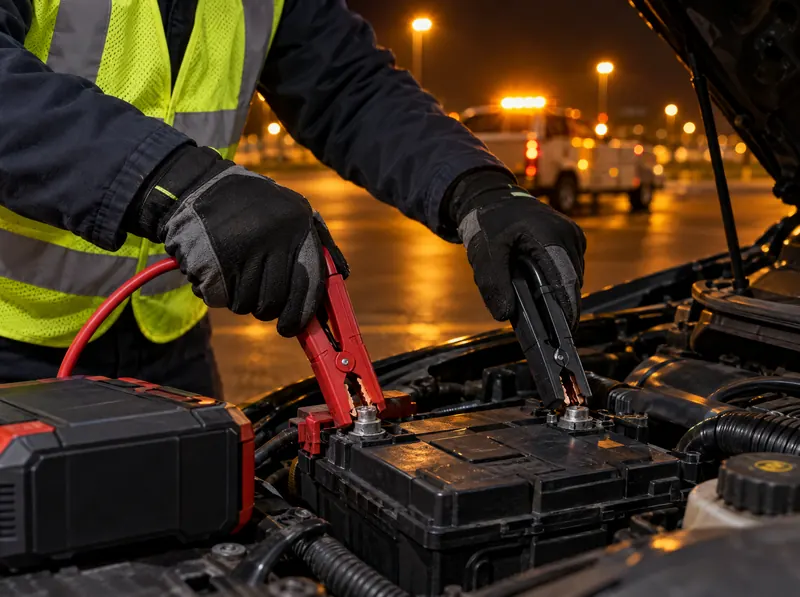
- The battery. A tired battery that worked last week just clicks now. Ask for a jump start.
- Tire pressure. Natural Resources Canada says tire pressure changes with temperature. A slow leak can go flat overnight. A flat tire change puts your spare on.
- The fuel tank. Alberta says to keep it more than half full in winter. The extra fuel cuts moisture in the fuel system, and gives you heat if you're stranded. Ran it dry? Fuel delivery brings enough to reach a pump.
- Anything bigger. A car that won't run after a jump, or has a warning light telling you to stop, needs car towing to a shop.
Who shows up when you call Sentinel?
Sentinel Towing is a towing and roadside network. We don't own trucks. A vetted local partner tow company does the job. We text your price and lock it before anyone is sent. Then we text you your driver's name and photo, and check on you by text until help arrives. That's our Stay-With-You Promise. You can also track your truck on a map, so you're not staring into the dark guessing. For more about the city's roads and winter, see our Red Deer towing page.
What should be in your car before the next cold snap?
Alberta's vehicle emergency kit list is long. For a Red Deer cold snap, these are the items that matter most:
- Blankets, extra clothing, and spare boots
- A candle in a deep can, with matches, for light and a little heat
- A small shovel, scraper and snowbrush, to keep the tailpipe clear
- Sand or non-clumping cat litter for grip
- Jumper cables and a phone charger
- A flashlight that runs on batteries or a hand crank
One tip people miss: Alberta says to pull items that can freeze out of the kit before it drops below zero. Frozen water won't help you.
Before you leave, check 511 Alberta or dial 5-1-1. Check the Government of Canada weather alerts too. Alberta suggests driving in daylight when you can, and telling someone your route and when you'll arrive. A block heater on a timer, set to start 2 hours before you leave, helps a cold engine. Have the battery, tires, heater and defroster checked before winter, as Alberta advises.
Stuck right now? Call 1-888-TOW-1213, or request help online.
Red Deer Cold Snap Questions
Should I walk to the next exit to get warm?
Usually no. Alberta's advice is to stay inside your car and call for help. Walking along the QEII puts you near fast traffic and out in the wind. Your car blocks the wind, even with the engine off.
Is it safe to run the engine while I wait?
Run it now and then, not the whole time. Clear snow away from the tailpipe first, and crack a window on the side away from the wind. If anyone starts to feel unwell, shut the engine off and let fresh air in.
How cold does it have to be before I worry?
Environment Canada calls a wind chill of -28 to -39 high risk for frostbite. Red Deer's airport sees a wind chill below -30 on about 23 days a year. If you're near that range and the car is dead, call right away.
Can I get a jump start on the highway shoulder?
Yes. Alberta lets you stop on the shoulder when your car can't move under its own power. Tell us your direction and the last exit you passed. Your driver can jump the battery right there if it's safe to work.
Rules change, so check the official source before you rely on it. Sources: ECCC climate normals, Red Deer A, Canada: Wind Chill Index, Canada: cold warnings, Health Canada: extreme cold, Alberta: extreme cold, Alberta: winter driving tips, Alberta: vehicle emergency kit, NRCan: winter driving tips, Alberta Use of Highway and Rules of the Road Regulation, City of Red Deer: reporting collisions, 511 Alberta.