Safety
Lake-Effect Snow Breakdowns Near Grand Rapids: What to Do When a Band Catches You
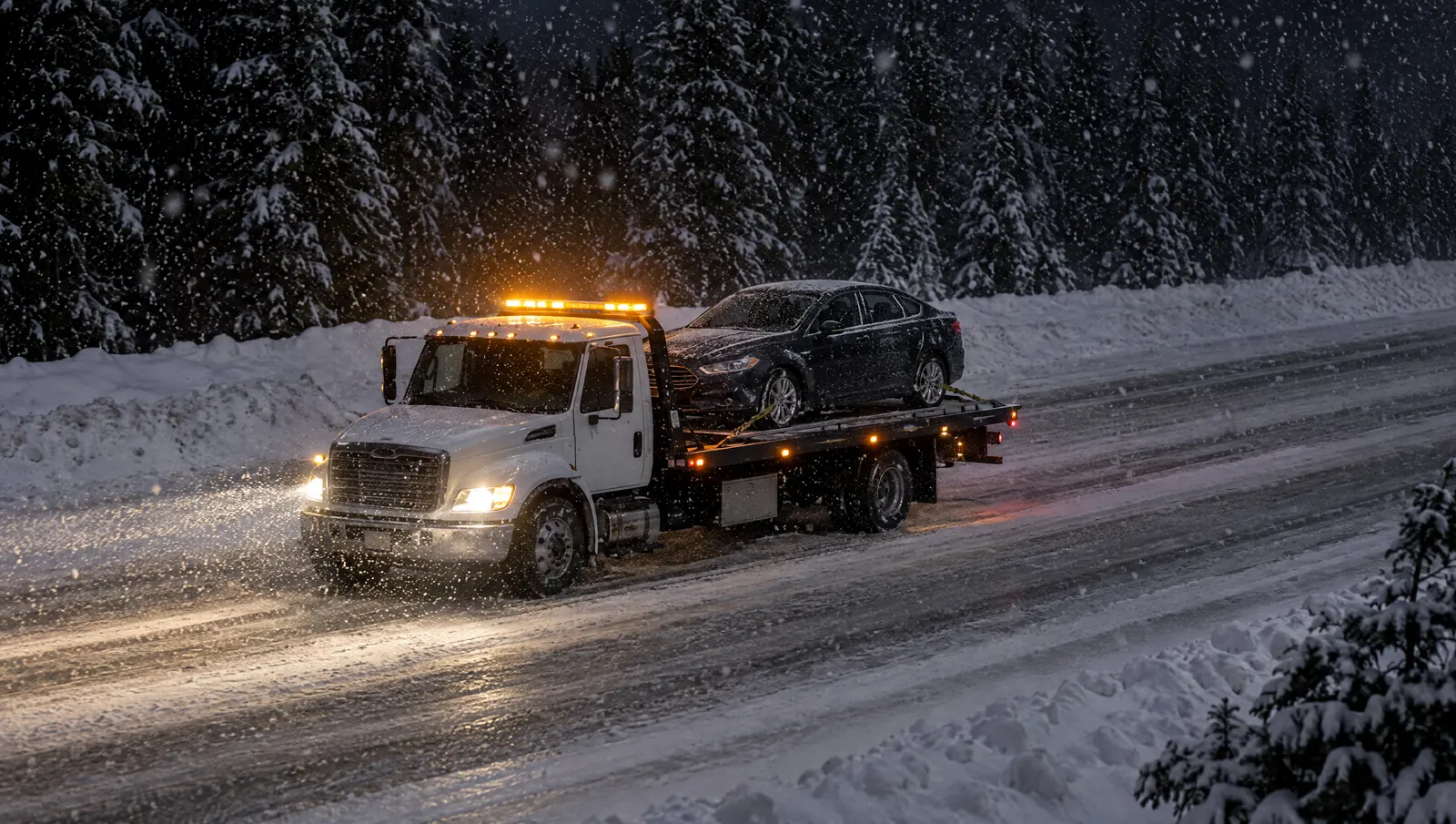
If your car quits inside a lake-effect band near Grand Rapids, get as far off the road as you can, turn on your hazards and stay in the car with your belt on. Keep the tailpipe clear of snow. Then call with your road, your direction and the last exit or cross street. The band may be gone soon, but the snow it left on the shoulder won't be.
Why does lake-effect snow hit one road and miss the next?
Cold air blows across Lake Michigan from the Wisconsin side. It picks up warmth and moisture over the water. Then it drops that moisture as snow once it reaches West Michigan.
The National Weather Service says this snow usually forms in narrow bands over a limited area. A band can dump very heavy snow and cut your view without warning. Outside the band, the road may be fine.
So you can leave a dry driveway in Creston and drive straight into a wall of white on I-196. Or the snow can pile up in Walker while downtown just gets flurries. That's what makes these bands tricky. The forecast for "Grand Rapids" may not match the road you're on.
Which winds bring the heaviest snow to Grand Rapids?
The NWS office in Grand Rapids says wind direction is probably the biggest factor in where the heaviest snow lands. The lake runs north to south, and West Michigan sits on its east side. So the snow comes ashore when the wind has some west in it. An east wind keeps the bands out over the lake.
| Wind from the | Where NWS says the heaviest snow tends to fall |
|---|---|
| West | Grand Haven to South Haven, and inland to Grand Rapids and Hastings |
| West-southwest | Mostly near the shore. Kent County is the one inland spot that sees heavier snow. |
| Northwest | Holland, Saugatuck, South Haven and Kalamazoo |
A straight west wind is the one to watch. The NWS says the lake is widest across from the area that gets hit hardest. More time over open water means a stronger band. So on a west-wind day, your commute on I-96 or M-45 out toward Allendale can get the worst of it.
Check the wind in the forecast before you leave. If it says west and lake-effect snow, plan for bands on your route.
What do the NWS warnings mean for your drive?
Your phone may buzz with one of these. Each one tells you something different.
- Lake Effect Snow Warning. Heavy lake snow is expected to pile up. NWS says the bands can bring sudden drops in visibility and hazardous driving.
- Lake effect snow advisory. Expect travel to be hard in some areas. NWS says some bands can still drop several inches in a few spots.
- Snow Squall Warning. A short, intense burst is coming to a small area. Squalls move in and out fast and usually last less than an hour. Gusty wind, falling temperatures and quick loss of visibility make them very dangerous for drivers.
- Winter Storm Warning. NWS says to delay your trip until things improve.
For a snow squall, NWS says to avoid or delay travel until it passes you. Waiting at a gas station on 28th Street beats driving into one on US 131.
What should you do when a band hits while you're driving?
You crest a hill on I-96 and the world goes white. Brake lights glow ahead, then vanish. Here's what NWS tells drivers to do in a squall:
- Slow down, but don't slam the brakes. On slick roads, hard braking can start a chain-reaction crash.
- Headlights and hazards on. Other drivers need to find you in the snow.
- Leave lots of space between you and the car ahead.
- If you have ABS, press the brake with steady pressure. Never pump it.
If the car starts to fail in the band, ease to the right shoulder while you still have power. Get as far from the lane line as you can. Try not to stop in a lane you can't see past.
If anyone is hurt, or your car is stuck in a live lane, call 911 first.
Should you stay in the car or walk to an exit?
Stay in the car. NWS is blunt about it: if your car gets stuck in a storm, stay inside. Leave it, and you can get lost fast in wind-driven snow.
A band can bury the shoulder and hide the edge of the ramp. Walking along M-6 in that is far riskier than waiting. While you wait, NWS says to:
- Run the engine in short spells each hour for heat, not nonstop.
- Crack a window while it runs, so carbon monoxide doesn't build up.
- Clear snow from the exhaust pipe. Step out only on the side away from traffic, and only when it's safe.
- Turn on the dome light at night while the engine runs, so rescuers can see you.
- Tie a bright cloth, red if you have it, to your antenna or door.
- Raise the hood once the snow stops, to show you need help.
Keep your belt on the whole time. A plow or a sliding car can still reach the shoulder.
Your car died on a side street. Does the odd-even rule still apply?
Yes. Grand Rapids runs seasonal parking rules from November 1 to April 1 on posted streets. On an odd date, from 1 a.m. to 6 p.m., you park on the side with odd addresses. Even dates flip it. From 6 p.m. to 1 a.m., either side is fine, but you must switch to match the next day's date by 1 a.m.
Some streets are one-side only. There, the posted side is off limits all the time. The city says you can get a ticket on the wrong side whether it snowed or not.
So say your car won't start on a signed street in Eastown or near Garfield Park. If it's on the wrong side, plows may not clear around it. The city says crews may skip a side during a snow event, and may leave side streets to get back to main roads. Your car can end up buried in a plow ridge. Get it moved before the next rule change, with a jump start if it just won't crank, or a tow if it won't run at all.
Slid into the snow? When a winch-out fits
A band hits, you tap the brakes and the car drifts into the ditch by the ramp. If the car isn't damaged and sits close to the road, a winch-out can pull it back onto solid ground. Don't spin the tires and dig yourself deeper. Don't push it out yourself on a freeway shoulder.
If it's far down a slope, on its side or hurt in the slide, that's beyond a winch-out. Ask for a tow instead. If anyone is hurt, call 911.
How do you get ready before lake-effect season?
Grand Rapids gets about 78 inches of snow in a normal year, and about 23 in January alone, per NOAA climate normals. Some of that comes in sudden bands. A few habits help:
- Clear all snow off the car before you go. NWS says flying snow from cars causes crashes.
- Tell someone your route, so they know where to start if you go quiet.
- Keep your phone charged, and carry a blanket, gloves and a scraper.
- Check MDOT's Mi Drive map for crashes and closures on your way.
- Look at the wind in the forecast. West wind plus lake snow means bands near you.
How does Sentinel help when the snow traps you?
Sentinel Towing is a towing and roadside network, not a tow company. A vetted local partner does the jump, the winch-out or the tow. We text you a locked price before anyone is sent. Then we check on you by text until help arrives, and you can track your truck on a map. That's our Stay-With-You Promise. Sentinel is not an emergency service. For roads and areas across the city, see the Grand Rapids towing page.
Stuck right now? Call 1-888-TOW-1213, or request help online.
Grand Rapids Lake-Effect Snow Questions
Why is it snowing hard on my road but not at home?
Lake-effect snow falls in narrow bands. NWS says each band hits a limited area, so your street and the freeway can get very different weather. Wind direction decides where the bands land.
Is a snow squall the same as lake-effect snow?
Not quite. NWS describes squalls as short bursts that move in and out fast and usually last less than an hour. Lake-effect snow comes in bands off Lake Michigan. Both can wipe out your view on the road.
Can I keep the engine running for heat while I wait?
NWS says to run it in short spells each hour. Crack a window while it runs. Keep the exhaust pipe clear of snow, since a blocked pipe can fill the car with fumes.
Will you come out to Walker or Allendale in a storm?
Call from anywhere around Grand Rapids. Give your road, your direction and the nearest exit or cross street. We text your price before a partner is sent.
Rules change, so check the official source before you rely on it. Sources: NWS Grand Rapids: wind and lake-effect snow, NWS: winter warnings explained, NWS: snow squalls, NWS: caught in a winter storm, City of Grand Rapids: seasonal parking, City of Grand Rapids: street maintenance, City of Grand Rapids: winter guide, MDOT Mi Drive, NOAA climate normals, Grand Rapids airport.