How-to
No Membership, No Problem: Roadside Help Near Kalamalka Lake in Vernon
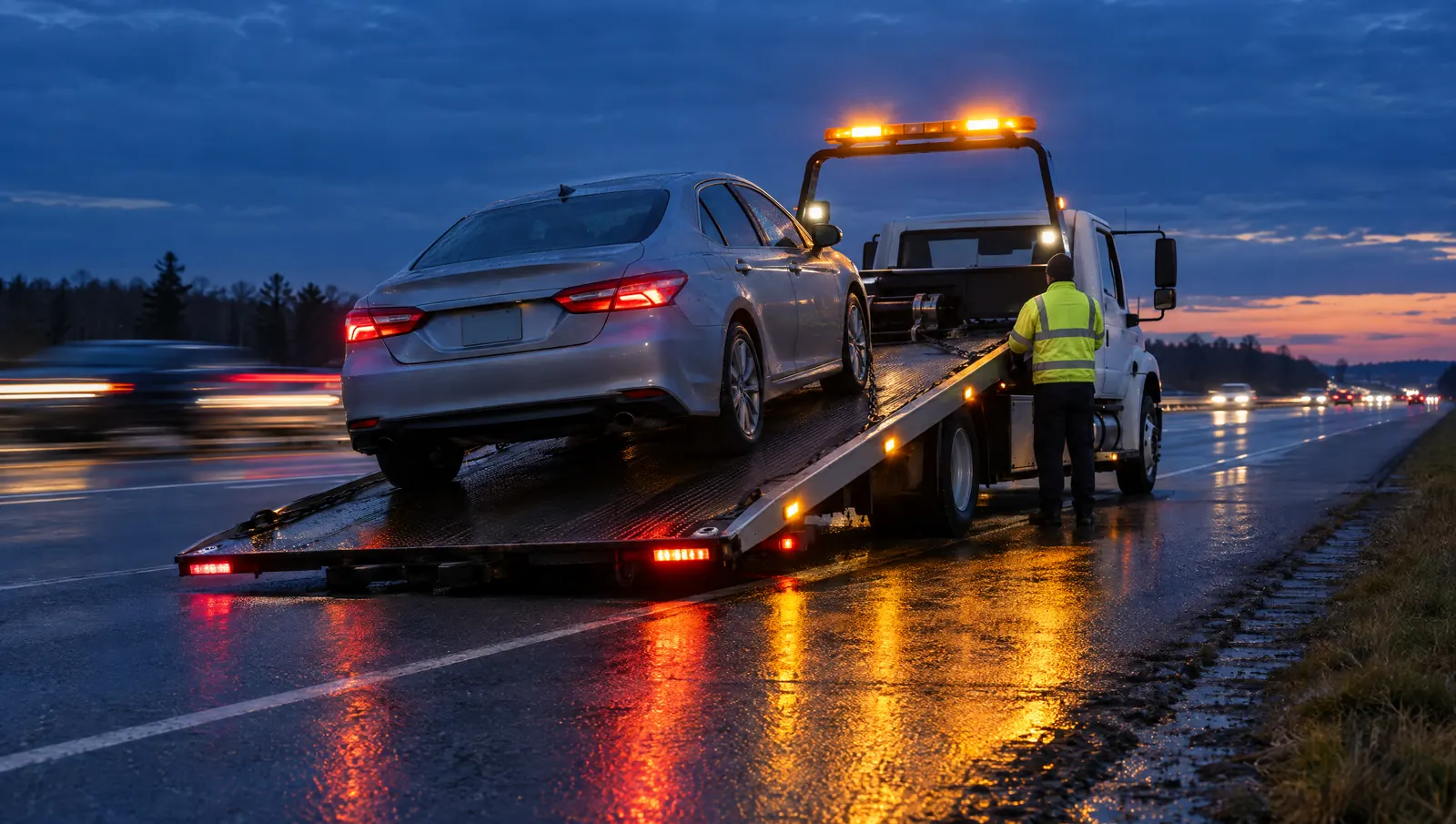
You don't need a membership to get roadside help in Vernon. You pay for one job, only when you need it. If your car quits on Highway 97 along Kalamalka Lake, get as far right as you can, turn your hazards on and stay in the car. Call and name the last landmark you passed, like the Gatzke Road interchange, the Kekuli Bay turnoff or the Vista Road turnoff. You get your price by text before anyone is sent.
Can you get roadside help in Vernon without a membership?
Yes. Plenty of drivers on the Kal Lake road have no plan at all. Maybe it lapsed. Maybe you're in a rental, or a friend's car, or your kid's first car.
None of that matters here. You call once, for one problem. A jump start, a lockout, a spare put on, a few liters of gas or a tow. There's no sign-up, no yearly fee and no card to find in the glove box.
What you do need is a clear picture of where you are. On the stretch between Oyama and Vernon, that's the hard part.
Where are you on the Kalamalka Lake stretch?
Highway 97 runs along the west shore of Kalamalka Lake, then enters Vernon and meets Highway 6 just south of the city center. From the car, much of it looks the same: rock on one side, blue water on the other.
So use the fixed points. Here they are, from south to north.
| Landmark | What to say |
|---|---|
| Wood Lake interchange | The Pelmewash Parkway ramps in Lake Country. Northbound you can only get off here. Southbound you can only get on. |
| Gatzke Road interchange | The overpass at the north end of Wood Lake, near Oyama |
| Kekuli Bay turnoff | The marked exit to Kekuli Bay Park, about 11 km south of Vernon |
| Vista Road turnoff | Where DriveBC's Kalamalka Lookout camera sits, south of town |
| Highway 6 junction | 25th Avenue, where Highway 6 heads east to Lumby |
Say the last one you passed and which one is next. Then add your direction in plain words: "heading into Vernon" or "heading toward Kelowna." A map pin helps too, but a pin on a lake road doesn't tell anyone which lane you're in.
What should you do if the shoulder is narrow?
Some spots along a lake road give you a lot of room. Others give you very little. Before you stop, look ahead for something better.
ICBC's advice is to steer to the edge and try for the nearest exit or service area. If you can't, pull off the road as far as you can. B.C.'s Motor Vehicle Act says the same thing in legal words. Outside a built-up area, you must not stop on the roadway if you can stop off it. A car that's too broken to move off is the exception.
- Coast to a turnoff if the car still rolls. The Kekuli Bay exit or the Vista Road turnoff beats a thin strip of gravel.
- Hazards on early, so drivers behind you have time to react.
- Stay buckled in the car. ICBC says to stay with your vehicle. Don't walk along the highway for help.
- Get out only if you must, like smoke or fire. Use the side away from traffic, then move well back from the road.
- Put an S.O.S. note in the windshield, as ICBC suggests. Never get into a stranger's car.
If smoke comes from under the hood, ICBC says get everyone out right away. Don't open the hood. Then call 911. If anyone is hurt, or your car is stuck in a live lane, call 911 first. Sentinel is not an emergency service.
What does the road look like south of Oyama?
Coming up from Kelowna, part of the drive is newer road. In 2013, the province opened a four-lane, nine-kilometer section between Winfield and Oyama. It was built above Wood Lake, west of the old highway, with a 100 km/h limit. It has two truck climbing lanes and a concrete median barrier.
That barrier matters if you break down. A truck coming from the wrong side can't just swing across. It has to reach an interchange first. So if you stop between Winfield and the Gatzke Road overpass, your direction is the most useful thing you can say.
The old road along the water is now called Pelmewash Parkway. If you're on it, say so. Your driver will look for you on a slow lakeside road, not on the highway above.
Which roadside help fits what went wrong?
Tell the dispatcher what the car did. That decides who gets sent and what they bring.
- It clicks but won't start after a long day at the Kekuli Bay boat launch: ask for a jump start.
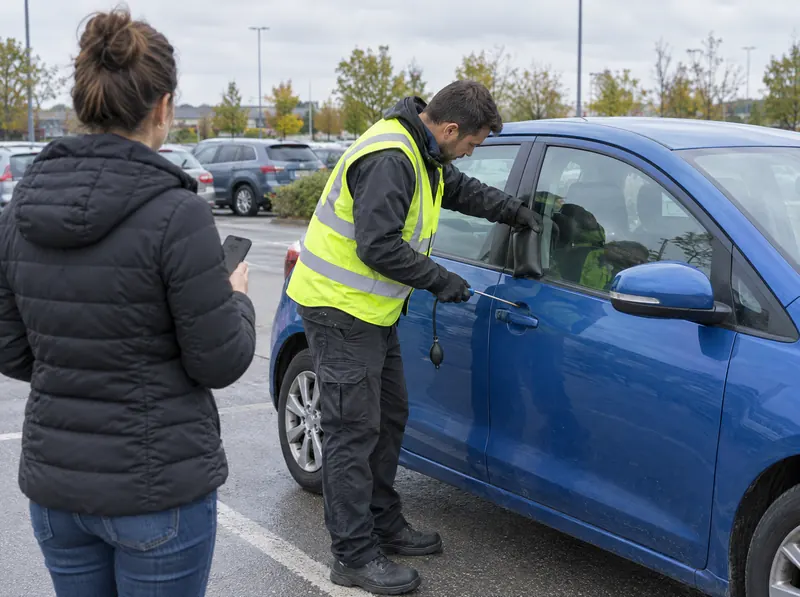
- The keys are on the seat and the doors are locked at a lake parking lot: that's a car lockout.
- A tire went flat and you have a good spare: a flat tire change, if there's a safe spot away from traffic. ICBC warns against roadside repairs on busy, fast roads, so a tight shoulder may mean a short tow to a turnoff first.
- You ran out of gas heading north on 97 toward Falkland, where it's 81 km from the 97A junction to Monte Creek: ask for fuel delivery.
- It overheated, crashed or won't move: a tow to a shop in Vernon or back toward Lake Country.
Partners handle cars, SUVs, minivans and light pickups. They don't move RVs, boat trailers or big trucks.
Why do cars quit near the lake in summer?
Vernon gets hot. Environment Canada's 1981 to 2010 normals for the Vernon Bella Vista station show about 25 days a year above 30 C. Heat is hard on batteries and cooling systems.
The classic case: you park at the boat launch, leave the radio or a cooler plugged in, and spend the afternoon on the water. The car bakes in the sun. When you come back, it won't turn over. BC Parks says parking at Kekuli Bay is limited in summer, so you may also be parked tight. Tell the dispatcher which lot you're in and where in the lot.
If the temperature gauge climbs while you drive, pull off at the next turnoff and shut the engine down. Don't open a hot radiator cap.
Do you need winter tires on this road?
Winter changes the plan. B.C. enforces winter tire and chain signs from October 1 to April 30 on signed routes. The province says winter tires are required on most highways outside the Lower Mainland and southeastern Vancouver Island.
January nights at the Vernon Bella Vista station average about minus 5 C. A weak battery that started fine in September may give up on a cold morning. If you slide off near the lake and the car isn't damaged, a winch-out may get you back on the road.
Before you drive, check DriveBC. The province points drivers there for highway conditions. It has a camera called Kalamalka Lookout, at the Vista Road turnoff, looking north toward Vernon.
What should drivers passing you do?
When your tow truck stops with flashing lights, B.C.'s Slow Down, Move Over rule applies. Drivers must slow to 70 km/h where the limit is 80 or more, and to 40 km/h where it's lower. On roads with more than one lane your way, they should move over when it's safe.
Not everyone does. Once the truck is there, stand where your driver tells you, away from traffic.
Who actually shows up?
Sentinel Towing is a towing and roadside network. We don't own trucks, and we have no Vernon office. A vetted local partner tow company does the job. We text you a locked price first, and then we check on you by text until help arrives. You can track your truck on a map as it comes down the lake. That's the Stay-With-You Promise. For more about roads around town, see our Vernon towing page.
Stuck right now? Call 1-888-TOW-1213, or request help online.
Vernon Roadside Help Questions
Do I have to sign up for anything before I call?
No. There's no membership and no yearly fee. You call for one job, get your price by text and decide. You only pay for the job you agree to.
My car died on Highway 97 by Kal Lake. Should I walk to the next turnoff?
No. ICBC says to stay with your vehicle. Keep your hazards on and your belt buckled. Call from the car and name the last landmark you passed.
Can you change my flat near Oyama?
Yes, if you have a good spare and there's a safe spot. If the shoulder is too tight, your driver may tow the car to a turnoff or a tire shop instead. You get the price by text either way.
My battery died at the Kekuli Bay boat launch. Can someone come to the lot?
Yes. Say you're at Kekuli Bay Park, off Highway 97, and where your car is in the lot. A jump start often does it. If the car still won't start, you can switch to a tow.
Rules change, so check the official source before you rely on it. Sources: B.C. Motor Vehicle Act, s. 187, ICBC emergency strategies, B.C. government, Winfield to Oyama project, BC Parks, Kekuli Bay Park, DriveBC Kalamalka Lookout camera, B.C. Slow Down, Move Over, B.C. winter tire enforcement, Environment Canada climate normals.